Diagnostic Procedure
- Turn ignition off. Loosen and retighten 2 engine ground bolts. See Figure. Disconnect Gray, 111-pin ECM harness connector (F48). See Figure. Check continuity between engine ground and ECM harness connector terminal No. 107 (Black wire). See Figure. Continuity should exist. Also, check circuit for short to voltage. If problem is found, repair as necessary. If problem is not found, go to next step.
- Reconnect ECM harness connector. Measure voltage between ground and ECM terminal No. 102 (Red wire) by backprobing. Voltage should be about 0 volt. Turn ignition on. Battery voltage should exist between 11-14 volts. If voltage is as specified, go to step 11. If voltage is not as specified, go to next step.
- Turn ignition off. Remove throttle control motor relay. See Fig 1. Measure voltage between ground and throttle control motor relay harness connector terminals No. 2 and 5 (White/Green wires). See Fig 2. If battery voltage exists, go to step 5. If battery voltage does not exist, go to next step.
- Check the following:
- Check fuse No. 63 (15-amp) located in fuse and fusible link box on left side of engine compartment.
- Check for open or short between throttle control motor relay and fuse. See SYSTEM WIRING DIAGRAMS
article in ELECTRICAL.
Repair as necessary. Go to next step.
- Disconnect ECM harness connector. See Figure. Check continuity of Red wire between throttle control motor relay harness connector terminal No. 3 and ECM harness connector terminal No. 102. See Fig 2 and Figure
. Also, check circuit for short to ground and short to voltage. If problem is found, go to next step. If problem is not found, go to step 7.
- Check the following:
- Check for poor connection at Black, 8-pin connectors E15 and F18 terminal No. 5 (Red wire). See Figure. Connector E15 is located on left side of engine compartment. See Figure. Connector F18 is located on left side of engine compartment. See Figure.
- Check for open or short between throttle control motor relay and ECM. See SYSTEM WIRING DIAGRAMS
article in ELECTRICAL.
Repair as necessary. Go to next step.
- Check continuity of between throttle control motor relay harness connector terminal No. 1 (Blue/Orange wire) and ECM harness connector terminal No. 26 (Orange wire). See Fig 2 and Figure
. Continuity should exist. Also, check circuit for short to ground and short to voltage. If problem is found, go to next step. If problem is not found, go to step 9.
- Check the following:
- Check for poor connection at Super Multiple Junction (SMJ) connectors M15 and E81 terminal 15D (Orange wire). See Figure. SMJ connectors are located under left side of instrument panel. For E81 connector, see Figure. For M15 connector, see Figure.
- Check for poor connection at White, 18-pin connectors F55 and M162 terminal No. 10 (Orange wire). See Figure. Connectors are located near ECM. For connector F55, see Figure. For connector M162, see Figure.
- Check for open or short between throttle control motor relay and ECM. See SYSTEM WIRING DIAGRAMS
article in ELECTRICAL.
Repair as necessary. Go to next step.
- Using jumper wires, apply battery voltage between throttle control motor relay terminals No. 1 and 2. See Fig 2. Check continuity between terminals No. 3 and 5. Continuity should exist. Remove jumper wires. Continuity should not exist. If continuity is as specified, go to next step. If continuity is not as specified, replace throttle control motor relay.
- No problem is indicated at this time. Problem may be intermittent. See INTERMITTENTS
in TROUBLE SHOOTING - NO CODES article.
- Turn ignition off. Disconnect electric throttle control actuator harness connector. See Figure. Disconnect ECM harness connector. See Figure. Check continuity of Yellow wire between electric throttle control actuator harness connector terminal No. 6 and ECM harness connector terminal No. 101, and Brown wire between electric throttle control actuator harness connector terminal No. 3 and ECM harness connector terminal No. 103. See . Figure and Figure
. Also, check circuits for short to ground, short to voltage or short together. If problem is found, repair as necessary. If problem is not found, go to next step.
- Remove air intake duct. Check for foreign matter between throttle valve and throttle housing. See Figure. If foreign matter is found, remove foreign matter, and clean throttle housing. If foreign matter is not found, go to next step.
- Measure resistance between electric throttle control actuator terminals No. 3 and 6. See Fig 3. Resistance should be 1-15ohm at 77°F (25°C). If resistance is as specified, go to next step. If resistance is not as specified, replace electric throttle control actuator. Perform throttle valve closed position learning and idle air volume learning. See PROGRAMMING .
- Check for intermittent condition. See INTERMITTENTS
in TROUBLE SHOOTING - NO CODES article. If problem is found, repair as necessary. If problem is not found, go to next step.
- Replace electric throttle control actuator. Perform throttle valve closed position learning and idle air volume learning. See PROGRAMMING .
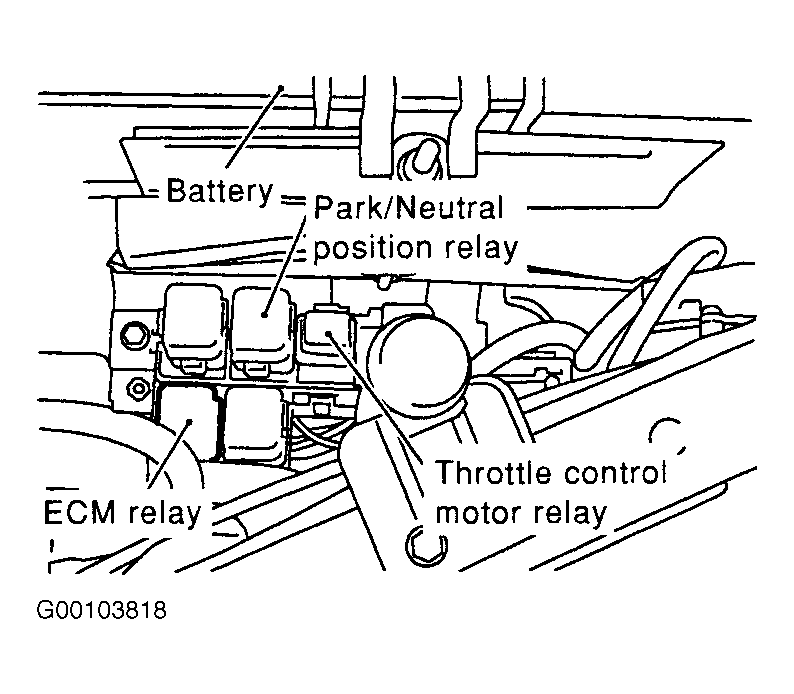 Courtesy of NISSAN MOTOR CO., U.S.A.
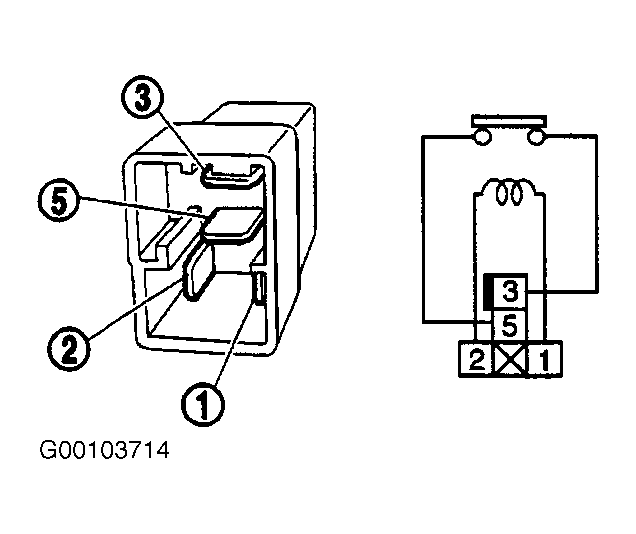 Courtesy of NISSAN MOTOR CO., U.S.A.
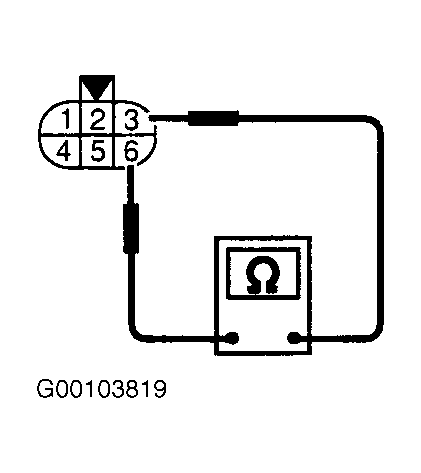 Courtesy of NISSAN MOTOR CO., U.S.A.