- INTAKE AIR FLOW METER SUB-ASSY
- Inspect the intake air flow meter resistance.
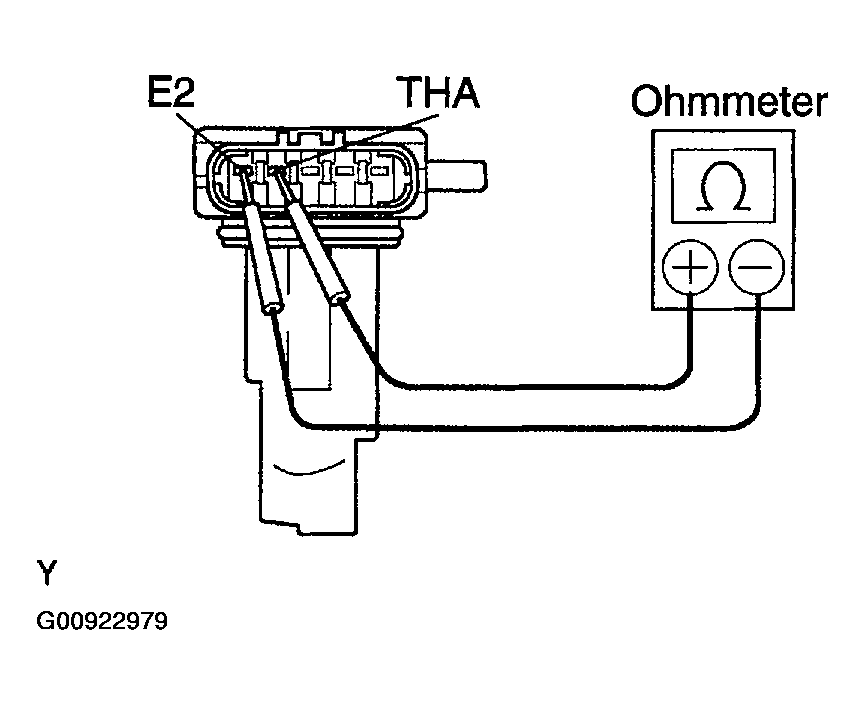
- Using an ohmmeter, measure the resistance between terminals THA and E2.
 Courtesy of © TOYOTA, LICENSE AGREEMENT TMS1002
- Resistance:
- At -20°C(-4°F) 13.6 to 18.4 kΩ
- At 20°C (68°F) 2.21 to 2.69 kΩ
- At 60°C (140°F) 0.49 to 0.67 kΩ
NOTE:
If the resistance is not as specified, replace the intake air flow meter.
- Inspect the intake air flow meter operation.
- Connect the intake air flow meter connector.
- Turn the ignition switch to ON.
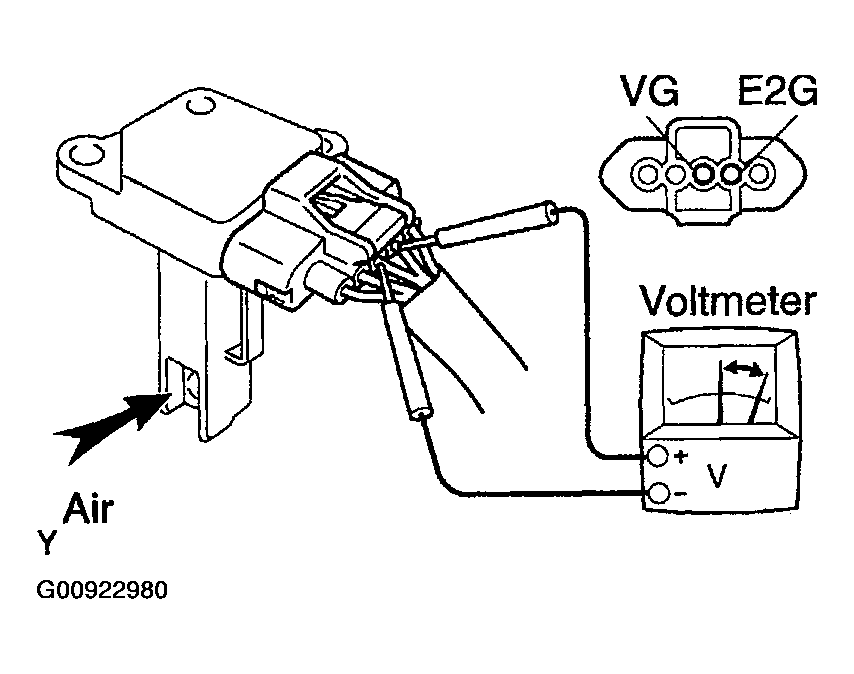
- Using a voltmeter, connect the positive (+) tester probe to terminal VG, and negative (-) tester probe to terminal E2G.
 Courtesy of © TOYOTA, LICENSE AGREEMENT TMS1002
- Blow air into the intake air flow meter, and check that the voltage fluctuates.
NOTE:
If operation is not as specified, replace the intake air flow meter.
- Turn the ignition switch to LOCK.
- Disconnect the intake air flow meter connector.
- CAMSHAFT TIMING OIL CONTROL VALVE ASSY
 Courtesy of © TOYOTA, LICENSE AGREEMENT TMS1002
- Resistance inspection.
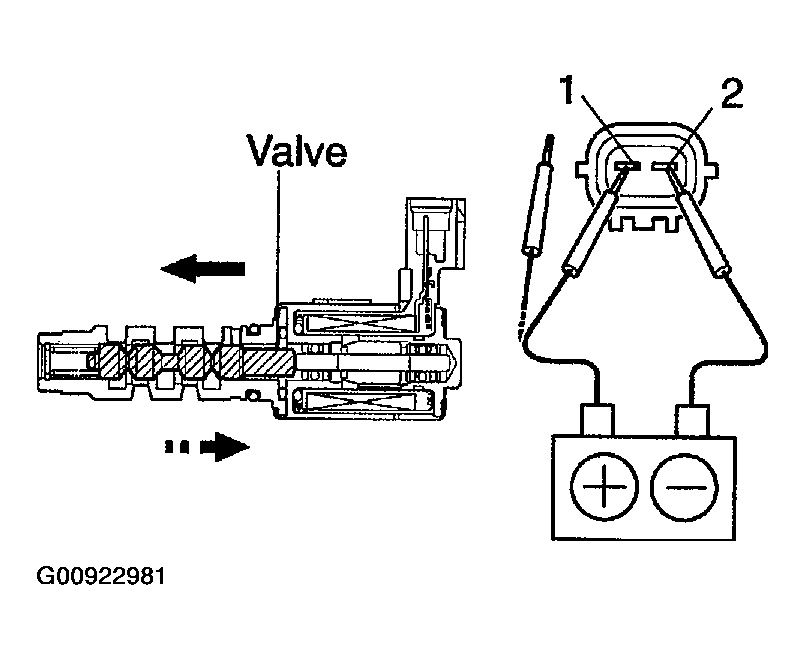
- Using an ohmmeter, measure the resistance between the terminals.
- Resistance: 6.9 to 7.9 Ω at 20°C (68°F)
- Movement inspection.
- Connect the positive (+) lead from the battery to terminal 1 and negative (-) lead to terminal 2, and check the movement of the valve.
NOTE:
Confirm the valve does not adhere.
NOTE:
Bad returning of the valve by entrance of foreign objects causes subtle pressure leak to the advanced direction. Then, DTC can be detected.
- THROTTLE BODY ASSY
- Check throttle body.
- Check that throttle valve shaft is not rickety.
- Check that each port is not stopped up.
- Check that throttle valve opens and closes smoothly.
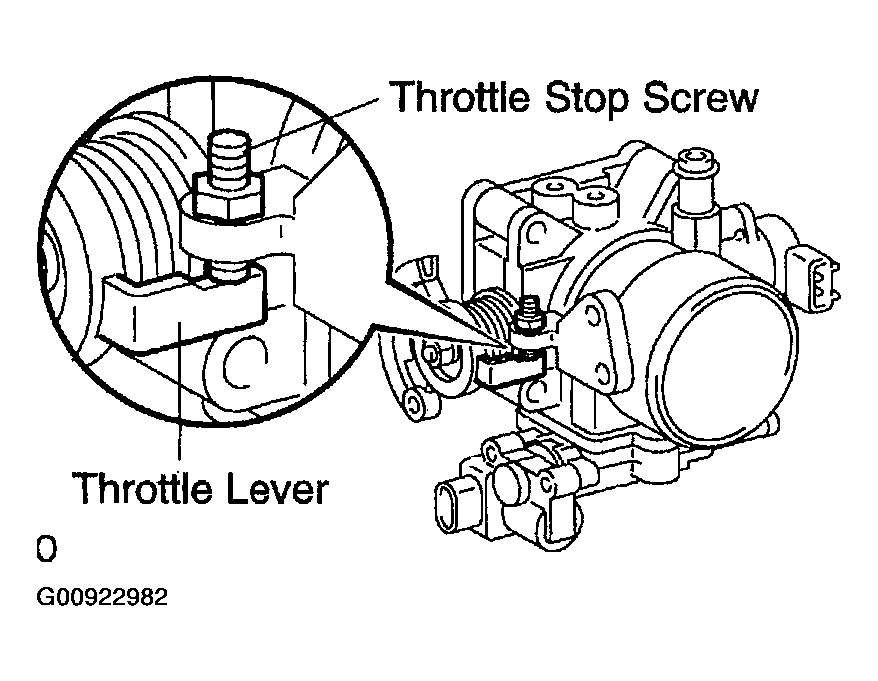
- Check that there is no clearance between the throttle stop screw and throttle lever at the throttle closed position.
 Courtesy of © TOYOTA, LICENSE AGREEMENT TMS1002
NOTE:
Do not adjust the throttle stop screw.
- E.F.I. THROTTLE POSITION SENSOR
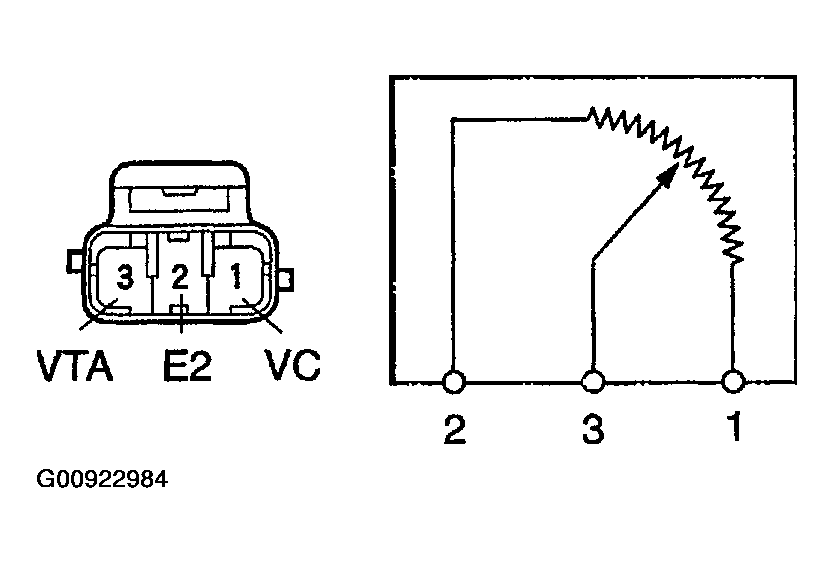
- Resistance inspection.
- Disconnect the throttle position sensor connector.
- Using an ohmmeter, measure the resistance between terminals VC and E2.
- Resistance: 2.5 to 6.0 kΩ
 Courtesy of © TOYOTA, LICENSE AGREEMENT TMS1002
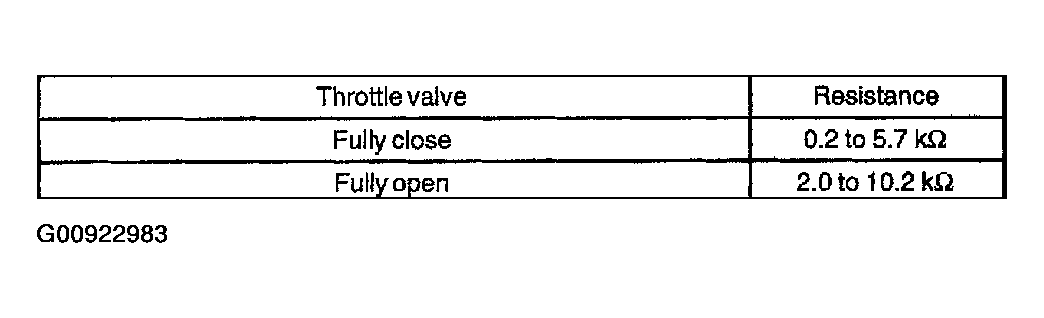
- Check the change of resistance between terminals VTA and E2.
- Change of resistance:
- The resistance value increases in proportion to the throttle lever opening value.
NOTE:
 Courtesy of © TOYOTA, LICENSE AGREEMENT TMS1002
- E.F.I. ENGINE COOLANT TEMPERATURE SENSOR
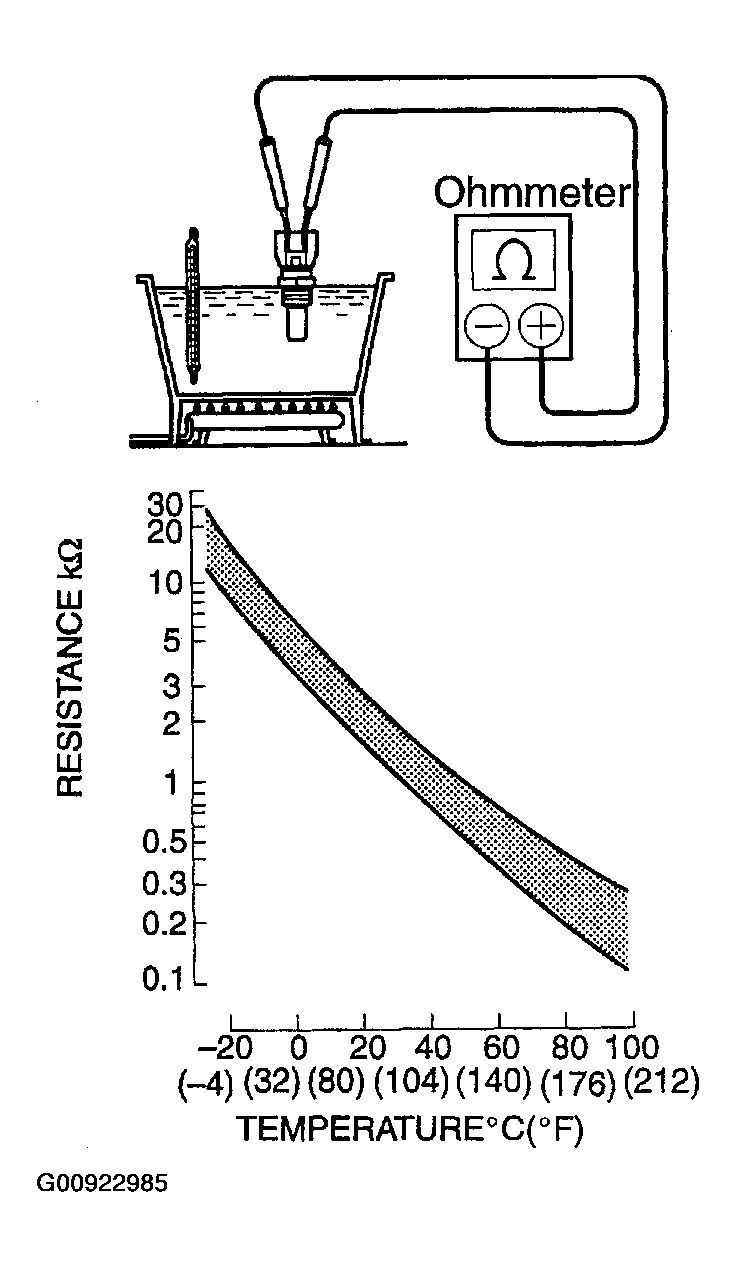
- Resistance inspection.
- Using an ohmmeter, measure the resistance between each terminal.
 Courtesy of © TOYOTA, LICENSE AGREEMENT TMS1002
- Resistance:
- At 20°C (68°F) 2.32 - 2.59 kΩ
- At 80°C (176°F) 0.310 - 0.326 kΩ
NOTE:
In case of checking the water temperature sensor in the water, be careful not to allow water to go into the terminals, and after checking, wipe out the sensor.
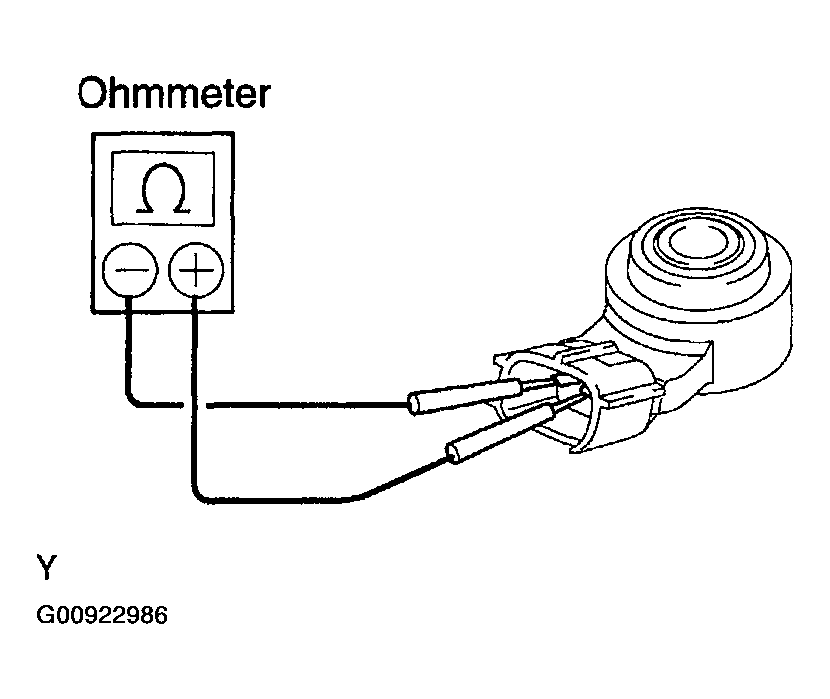
- KNOCK CONTROL SENSOR
- Using an ohmmeter, measure the resistance between terminals.
 Courtesy of © TOYOTA, LICENSE AGREEMENT TMS1002
- Resistance: 120 - 280 kΩ at 20° C (68°F)
NOTE:
If the resistance is not specified, replace the sensor.
- E.F.I. CIRCUIT OPENING RELAY ASSY
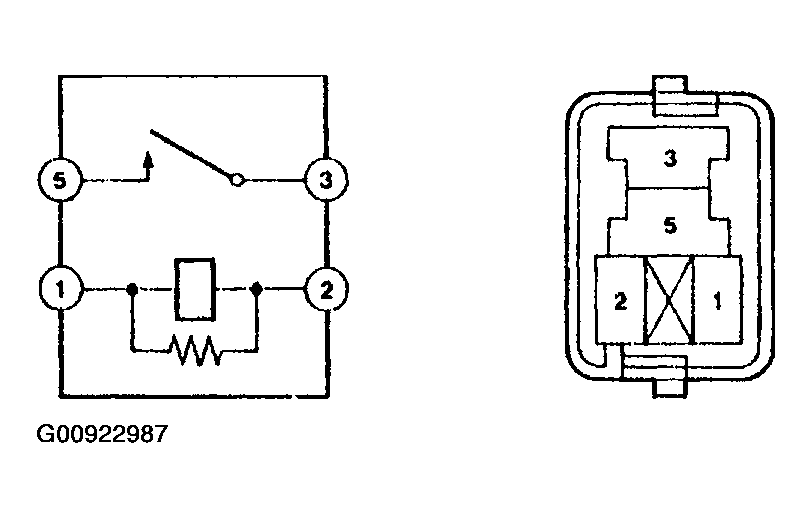 Courtesy of © TOYOTA, LICENSE AGREEMENT TMS1002
- Continuity inspection.
- Using an ohmmeter, check that continuity exists between each terminal.
- Specified condition:
- Between terminals 1 and 2 - Continuity
- Between terminals 3 and 5 - No continuity
- Using an ohmmeter, check that continuity exists between terminals 3 and 5 when the battery voltage is applied across terminals 1 and 2.
- E.F.I ECU RELAY
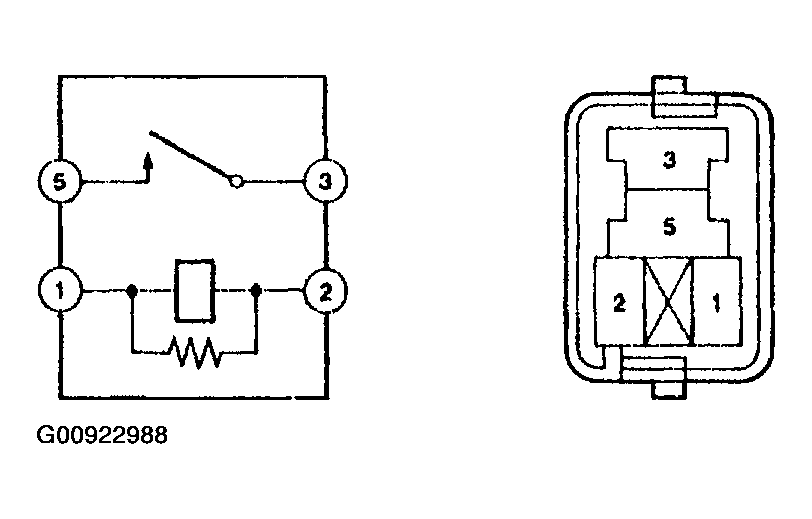 Courtesy of © TOYOTA, LICENSE AGREEMENT TMS1002
- Continuity inspection.
- Using an ohmmeter, check that continuity exists between each terminal.
- Specified condition:
- Between terminals 1 and 2 - Continuity
- Between terminals 3 and 5 - No continuity
- Using an ohmmeter, check that continuity exists between terminals 3 and 5 when the battery voltage is applied across terminals 1 and 2.