EGR System Test (Federal)
- Before checking EGR system, ensure throttle position sensor, coolant temperature sensor and pressure sensor are operating correctly. See THROTTLE POSITION SENSOR, COOLANT (WATER) TEMPERATURE SENSOR and PRESSURE SENSOR under ENGINE SENSORS & SWITCHES.
- Ensure no 5th gear switch signal is applied to ECM. The ECM is located behind glove box. To check 5th gear switch signal, check for voltage at terminal A5 (Light Blue wire) of ECM. If voltage is present, check 5th gear switch circuit. See WIRING DIAGRAMS
article in the ENGINE PERFORMANCE Section.
- To check EGR system, place transmission in Neutral. Apply parking brake. With coolant temperature less than 127°F (53°C), start engine and operated at high RPM. EGR diaphragm should not move.
- Warm engine to normal operating temperature. Operate engine at high RPM. EGR valve diaphragm should move up during acceleration.
- If EGR valve does not operated as specified, check for misrouted, restricted, clogged or deteriorated vacuum hoses. If vacuum hoses are okay, check EGR valve and EGR modulator (backpressure transducer). See EGR VALVE and EGR MODULATOR (BACKPRESSURE TRANSDUCER) under EXHAUST GAS RECIRCULATION (EGR).
- If EGR valve and EGR modulator (backpressure transducer) are okay, check EGR Vacuum Switching Valve (VSV). See EGR VACUUM SWITCHING VALVE (VSV) under EXHAUST GAS RECIRCULATION (EGR).
- If VSV is okay, check for open or short in wiring circuit. See Fig 1
. Check for defective connections at ECM and VSV. If connections are okay, check EFI main relay. See EFI MAIN RELAY under RELAYS & SOLENOIDS. If all components and wiring are okay, substitute a known good ECM and recheck.
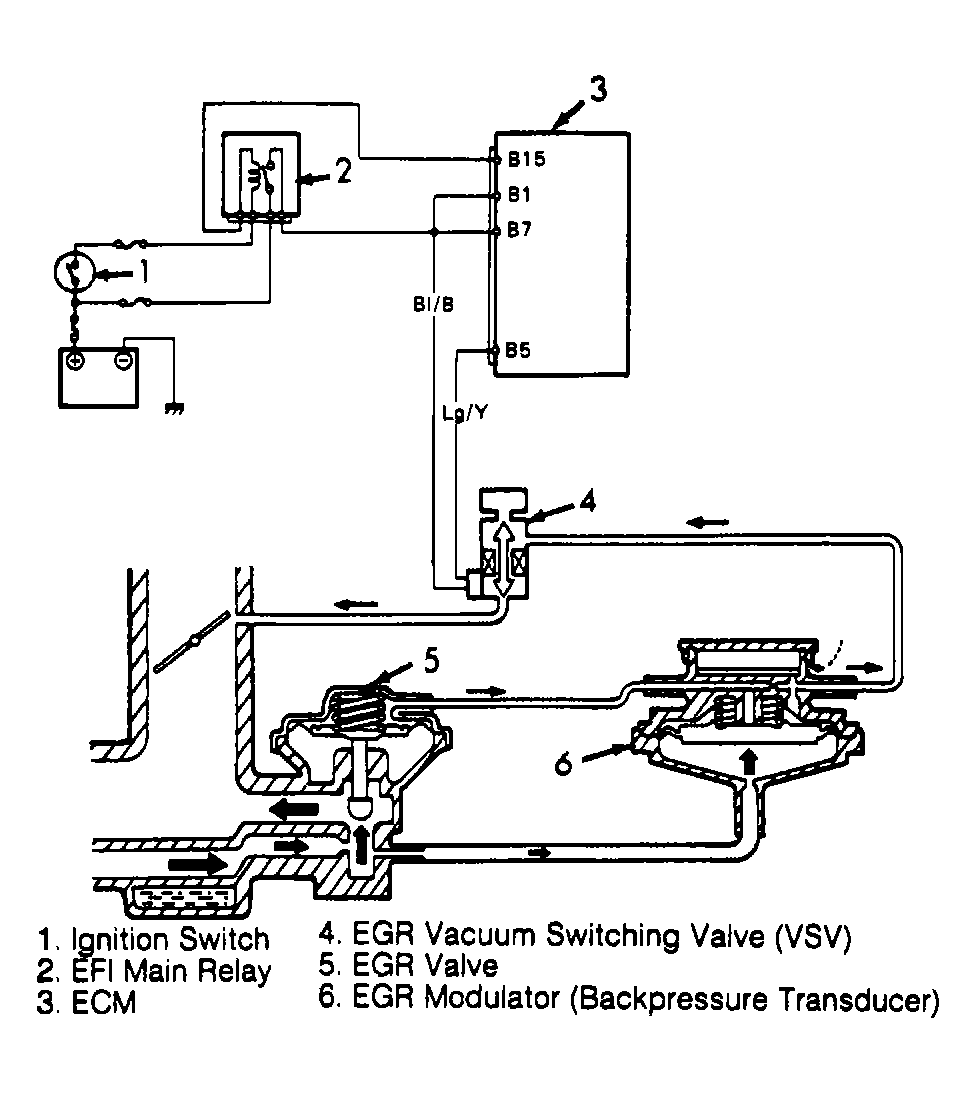 Courtesy of SUZUKI OF AMERICA CORP.