Fault Isolation Procedure
- Check additional trouble codes in the ECM system:
- Turn the ignition switch to the ON position.
- Contact ECM.
- See whether any of the following DTCs have been recorded: DTCs P0115, P0116, P0119, P0131, P0132, P0133, P0134, P1131, P1132, P1133, P1135, P1136.
If any of the above trouble codes have been registered, follow the fault isolation procedure for that code and then go to step 18. If no other trouble codes are present, go to next step.
- Checking the antifreeze: At outside temperatures below 0°C, check the freezing point of the coolant. If the coolant has frozen, rectify the fault and go to step 18. If it is not possible for the coolant to have frozen, go to next step.
- Checking temperature:
- Let the engine cool down completely.
- Read value: Coolant Temperature (ECM).
- Check the temperature of the cylinder head with an external temperature gauge.
- Check that the diagnostic tool reading is within ±10° of the actual temperature while the engine is warming up.
- Conclude the test and turn off the engine when the actual temperature has reached approximately 60°C.
If this function is correct, go to next step, otherwise go to step 12.
- Checking the thermostat: Place your hand on the upper radiator hose near the thermostat to check whether the hose grows hot quickly when the temperature of the coolant approaches 89°C and the thermostat opens. After that the coolant temperature should remain fairly constant, about 85-95°C for a minute or so. If this function is correct, go to step 6, otherwise go to next step.
- Changing components: Change the thermostat. When finished, go to step 18.
- Checking the sensor's grounding:
- Unplug the connector: Heated oxygen sensor 1 592°F.
- Connect Test Lamp (86 1 857) to B+ and pin 3 of the female connector.
- Jiggle the leads and in-line connectors at several places and in different directions to reveal intermittent breaks and short circuits in the wiring harness. Observe the multimeter, test lamp or diagnostic tool while doing this.
If the test lamp illuminates, go to step 8, otherwise go to next step.
- Rectifying the lead: The lead from pin 58 of the control module to pin 3 of the female connector is faulty. Rectify the fault and go to step 18.
- Checking the control module's sensor input:
- Turn the ignition switch to the ON position.
- Read value: O2S 1.
- Jiggle the leads and in-line connectors at several places and in different directions to reveal intermittent breaks and short circuits in the wiring harness. Observe the multimeter, test lamp or diagnostic tool while doing this.
If the diagnostic tool shows a reading of 0.400-0.500 volts, go to step 10, otherwise go to next step.
- Rectifying the lead: The lead from pin 4 of the female connector to pin 34 of the control module is faulty. Rectify the fault and go to step 18.
- Checking the control module's sensor input (continued):
- Connect a jumper lead between pins 3 and 4 of the female connector.
- Read value: O2S 1.
- Jiggle the leads and in-line connectors at several places and in different directions to reveal intermittent breaks and short circuits in the wiring harness. Observe the multimeter, test lamp or diagnostic tool while doing this.
If the diagnostic tool shows a reading of 0.000-0.020 volt, go to next step, otherwise go to step 9.
- Changing components: Change Heated oxygen sensor 1. When finished, go to step 18.
- Checking the sensor's grounding:
- Unplug the connector: Coolant temperature sensor (202).
- Connect Test Lamp (86 1 857) to B+ and pin 2 of the female connector (black).
- Jiggle the leads and in-line connectors at several places and in different directions to reveal intermittent breaks and short circuits in the wiring harness. Observe the multimeter, test lamp or diagnostic tool while doing this.
If the test lamp illuminates, go to step 14, otherwise go to next step.
- Rectifying the lead: The lead from crimp connection 17 (black) to pin 2 of the female connector is faulty. Rectify the fault and go to step 18.
- Checking the control module's sensor input:
- Turn the ignition switch to the ON position.
- Read value: Coolant Temperature.
- Jiggle the leads and in-line connectors at several places and in different directions to reveal intermittent breaks and short circuits in the wiring harness. Observe the multimeter, test lamp or diagnostic tool while doing this.
If the diagnostic tool shows a reading of -40°C, go to step 16, otherwise go to next step.
- Rectifying the lead: The lead from pin 1 (white/green) of the female connector to pin 39 of the control module is faulty. Rectify the fault and go to step 18.
- Checking the control module's sensor input (continued):
- Connect a jumper lead between pins 1 and 2 of the female connector.
- Read value: Coolant Temperature.
- Jiggle the leads and in-line connectors at several places and in different directions to reveal intermittent breaks and short circuits in the wiring harness. Observe the multimeter, test lamp or diagnostic tool while doing this.
If the diagnostic tool shows a reading of 160°C, go to next step, otherwise go to step 15.
- Changing components: Change the Coolant temperature sensor. When finished, go to step 18.
- Initiating diagnostics:
- Check the diagnostic status of P0125 with the diagnostic tool.
- The intake air and coolant temperatures must exceed 10°C.
- Start the engine and run it at idling speed.
- Wait 4 minutes.
- State what the diagnostic tool shows:
- OK - The steps taken to rectify the fault were correct. Clear the DTCs in all systems.
- NOT READY - The diagnosis has not yet been performed. Therefore, attempt to activate the diagnosis again by going back in the fault diagnosis to the section 'Initiating diagnosis'. Then continue fault diagnosis from there.
- DTC - Diagnosis indicates that the fault is still present.
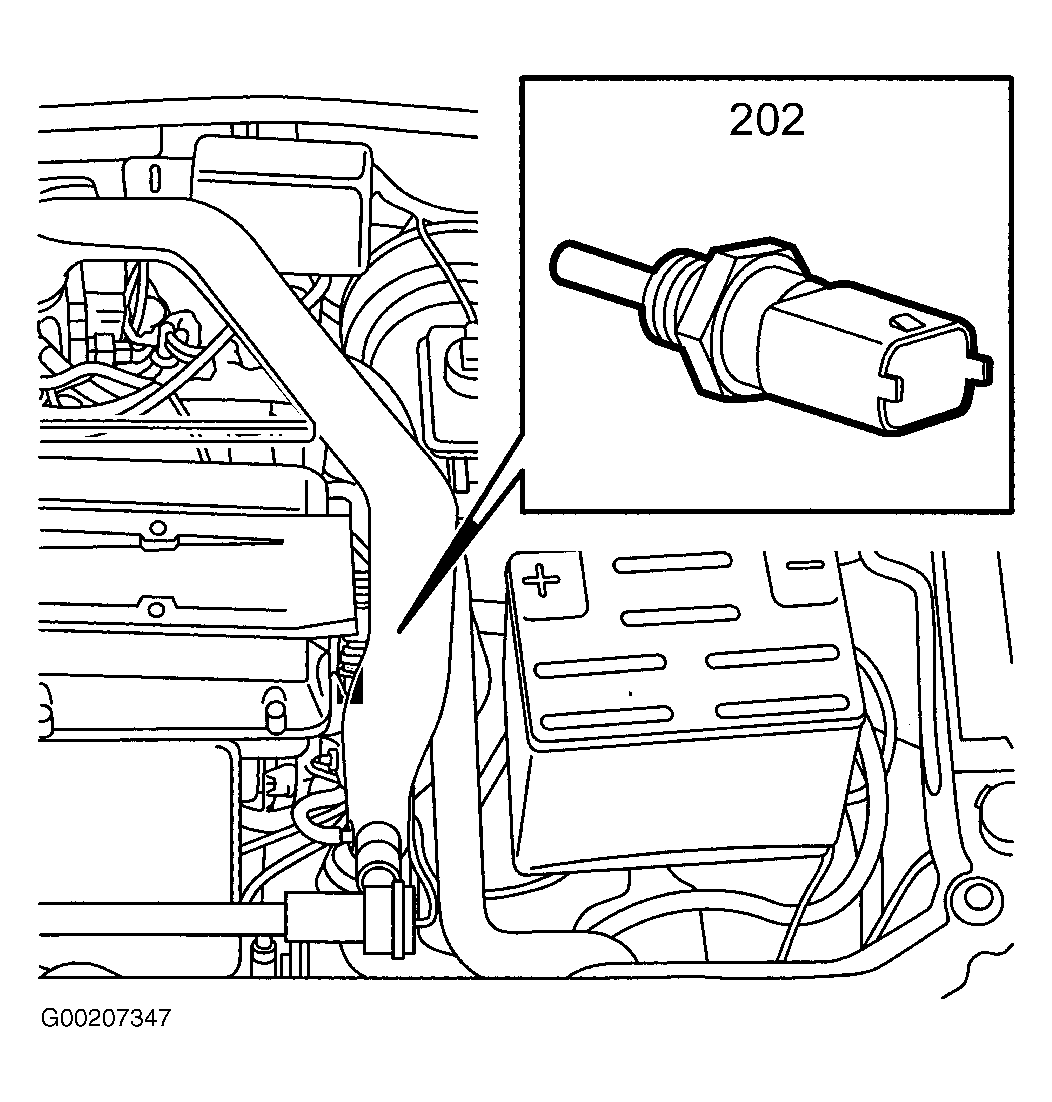 Courtesy of SAAB-SCANIA OF AMERICA, INC.
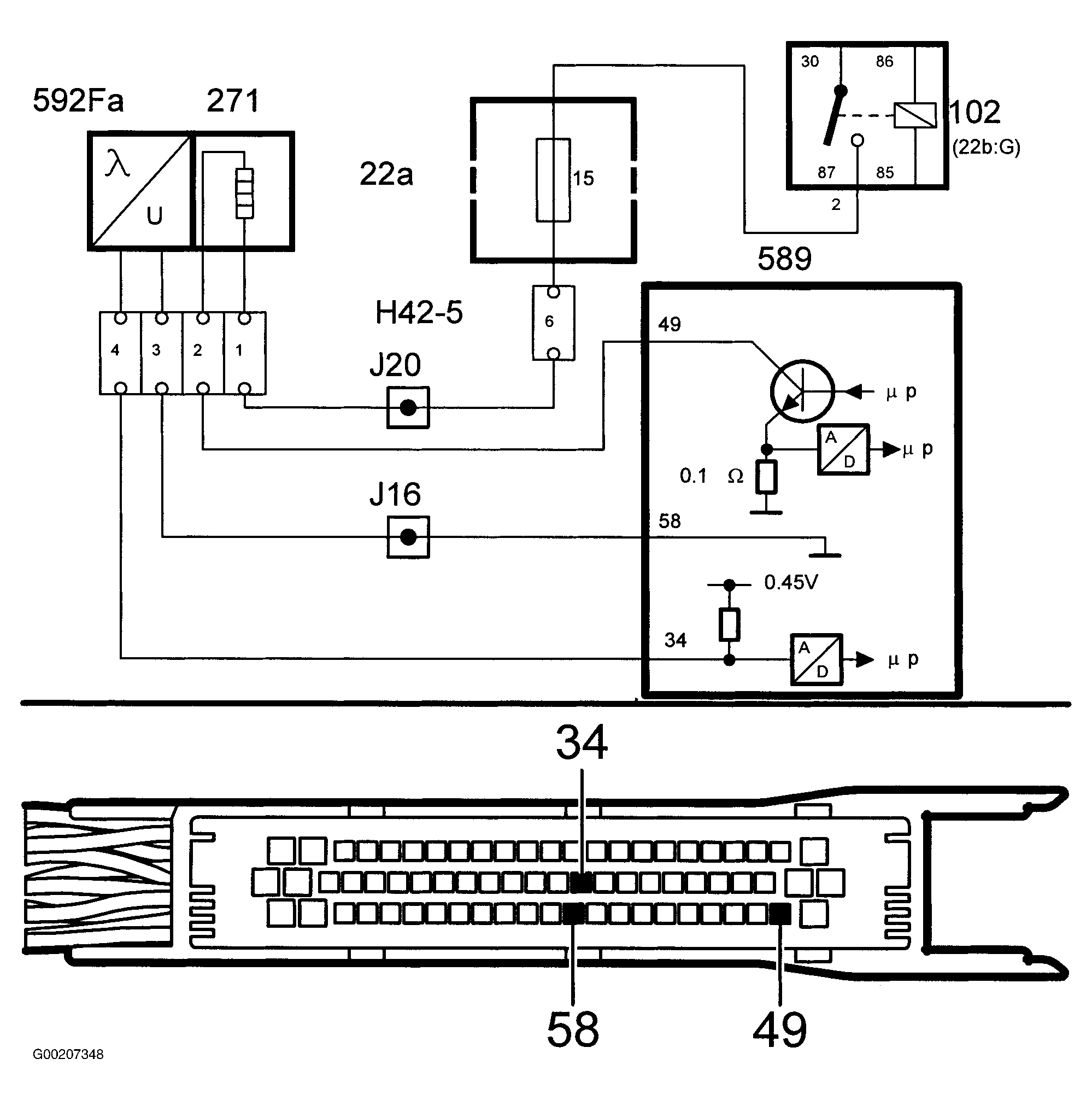 Courtesy of SAAB-SCANIA OF AMERICA, INC.
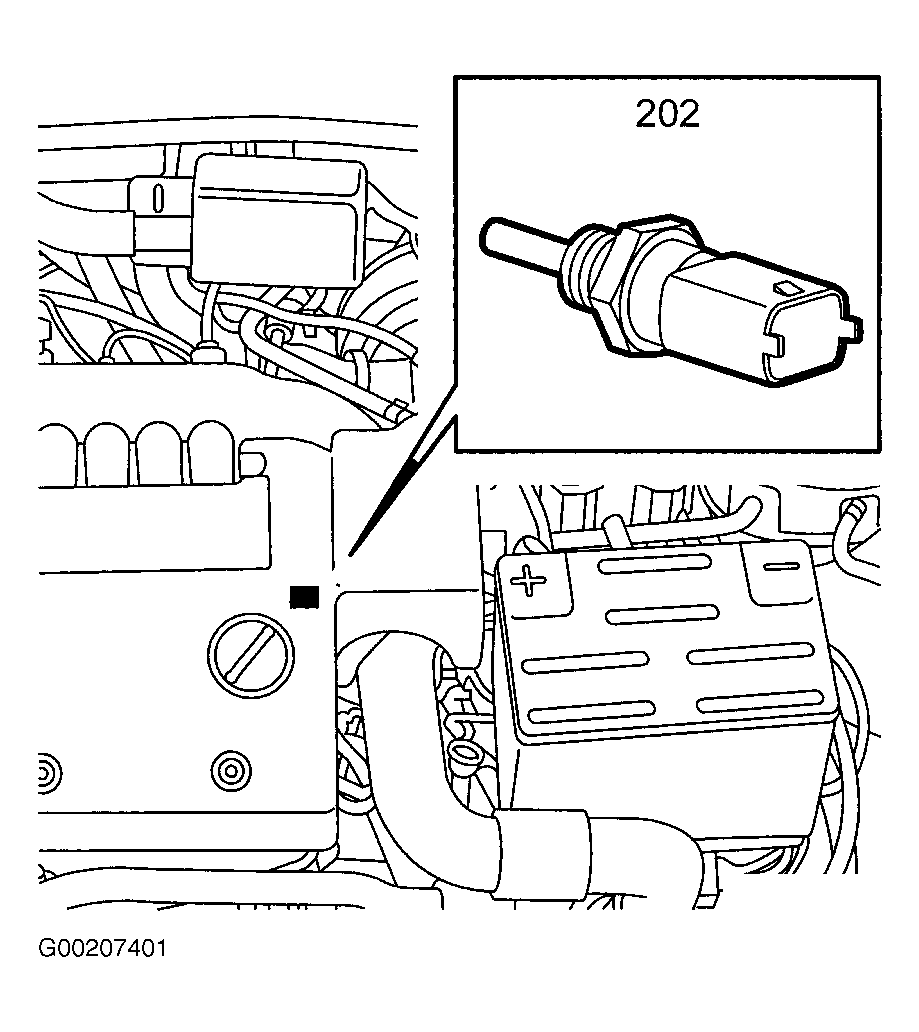 Courtesy of SAAB-SCANIA OF AMERICA, INC.
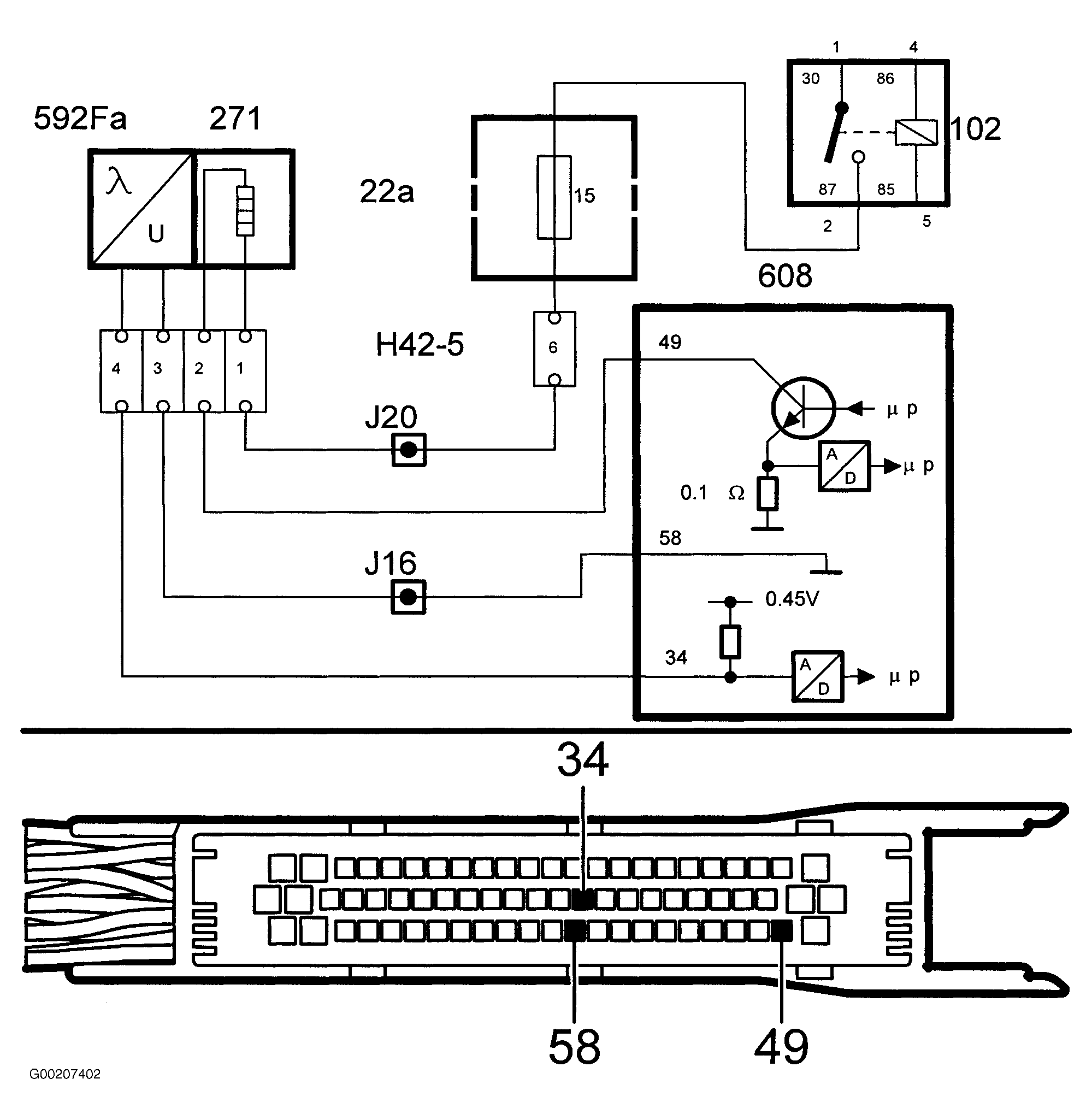 Courtesy of SAAB-SCANIA OF AMERICA, INC.