EGR System Diagnosis
- Perform powertrain diagnostic system check. See POWERTRAIN DIAGNOSTIC SYSTEM CHECK in appropriate SELF-DIAGNOSTICS article. After performing powertrain diagnostic system check, go to next step.
- Set parking brake and block wheels. Install scan tool. Start engine and let idle until normal operating temperature is obtained. Using scan tool, check actual EGR position. If scan tool indicates greater than zero percent, go to step 4. If scan tool indicates zero percent, go to next step.
- Turn ignition on with engine off. Using scan tool, command EGR position to 100 percent. If actual EGR position follows the commanded EGR position, go to step 17. If the actual EGR position does not follow commanded EGR position, go to step 6.
- Disconnect EGR valve harness connector. If scan tool indicates greater than zero percent, go to step 16. If scan tool indicates zero percent, go to next step.
- Turn ignition off. Connect a test light between EGR valve feed circuit (Red wire) and EGR valve control circuit (White wire) at EGR valve harness connector. See Fig 1. Turn ignition on with engine off. If test light illuminates, go to step 15. If test light does not illuminate, go to step 10.
- Turn ignition on with engine off. Connect a test light between EGR valve feed circuit (Red wire) and EGR valve control circuit (White wire) at EGR valve harness connector. See Fig 1. Using scan tool, command EGR position to 100 percent. If test light illuminates, go to step 13. If test light does not illuminate, go to next step.
- Turn ignition off. Using a test light connected to battery voltage, probe EGR valve control circuit (White wire) at EGR valve harness connector. See Fig 1. If test light illuminates, go to next step. If test light does not illuminate, go to step 9.
- Check for an open in EGR valve feed circuit. If problem exists, go to step 22. If problem does not exist, go to step 21.
- Check for open, high resistance or short to voltage in EGR valve control circuit. If problem exists, go to step 22. If problem does not exist, go to step 21.
- Turn ignition on with engine off. Using a DVOM connected to ground, probe EGR reference voltage circuit (Gray wire) at EGR valve harness connector. See Fig 1. If voltage is greater than 5.2 volts, go to step 22. If voltage is 5.2 volts or less, go to next step.
- Turn ignition off. Using a test light connected to battery voltage, probe EGR sensor ground circuit (Black wire) at EGR valve harness connector. See Fig 1. If test light illuminates, go to step 19. If test light does not illuminate, go to next step.
- Turn ignition off. Disconnect VCM harness connectors. Check for open in EGR sensor ground circuit. If problem exists, go to step 22. If problem does not exist, go to step 21.
- Turn ignition on with engine off. Using a DVOM connected to ground, probe EGR reference voltage circuit (Gray wire) at EGR valve harness connector. See Fig 1. If voltage is near 5.2 volts, go to next step. If voltage is not near 5.2 volts, go to step 22.
- Disconnect EGR valve harness connector. Install jumper wire between EGR reference voltage circuit (Gray wire) and EGR pintle position signal circuit (Brown wire) at EGR valve harness connector. See Fig 1. Turn ignition on with engine off. If actual EGR position is near 100 percent, go to step 19. If actual EGR position is not near 100 percent, go to step 20.
- Disconnect VCM harness connector. Turn ignition on with engine off. Check for short to voltage in EGR valve feed circuit. If problem exists, go to step 22. If problem does not exist, go to step 23.
- Disconnect VCM harness connectors. Turn ignition on with engine off. Check for short to voltage in EGR pintle position signal circuit. If problem exists, go to step 22. If problem does not exist, go to step 23.
- Start engine. Observe MAP sensor reading. Using scan tool, command EGR position to 30 percent. Observe MAP sensor reading again. If MAP sensor reading increases, go to step 24. If MAP sensor reading does not increase, go to next step.
- Repair blockage in EGR valve passages. After repairs, go to step 24.
- Replace EGR valve. After repairs, go to step 24.
- Check for short to ground in EGR pintle position signal circuit. If problem exists, go to step 22. If problem does not exist, go to next step.
- Check for poor connections at VCM. If problem exists, go to step 22. If problem does not exist, go to step 23.
- Repair circuit as necessary. After repairs, go to step 24.
- Replace VCM and reprogram. Perform VTD password relearn procedure and crankshaft variation learn procedure. See COMPUTER RELEARN PROCEDURES article in GENERAL INFORMATION. After repairs, go to next step.
- Set parking brake and block wheels. Install scan tool. Start engine and let idle until normal operating temperature is obtained. Using scan tool, command EGR on and off. If actual EGR position follows the commanded EGR position, system is okay. If the actual EGR position does not follow commanded EGR position, go to step 2.
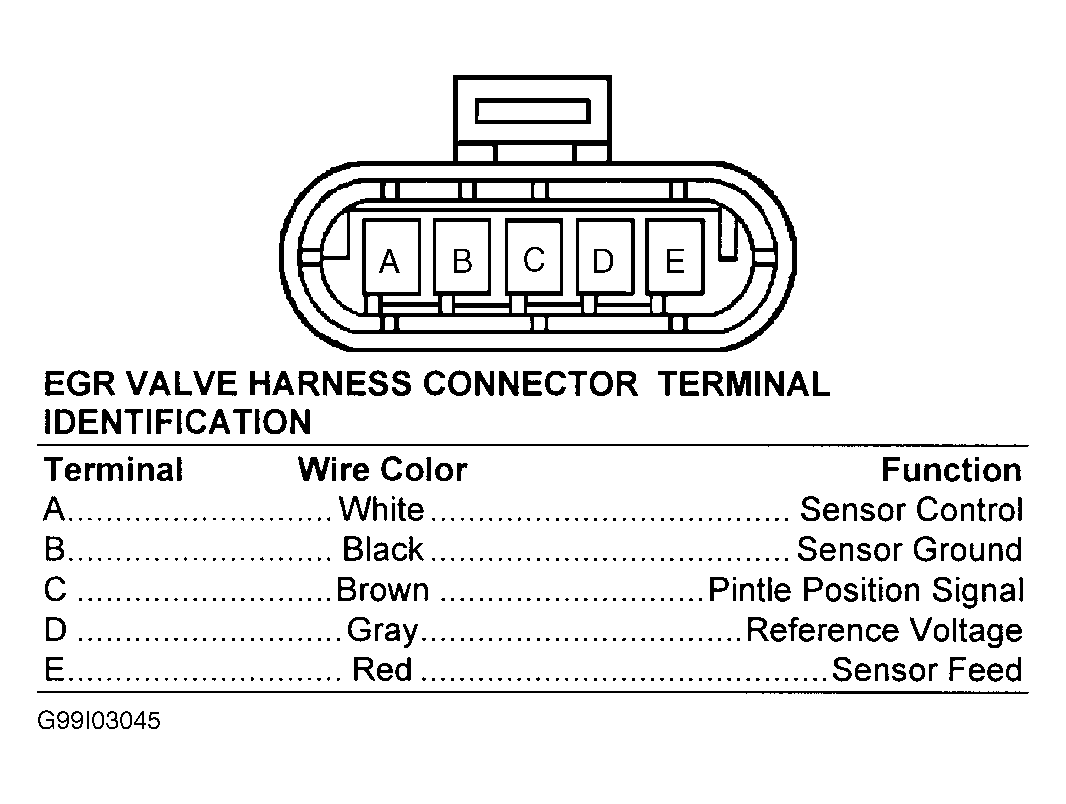 Courtesy of GENERAL MOTORS CORP.