Ball Joint Checking
- Raise front of vehicle and support with stands. Check ball joint for grease leakage, and dust cover for cracks or damage. Check ball joint end play.
- Attach dial indicator to transverse link with indicator tip against lower edge of brake caliper. Ensure front wheels are in straight-ahead position. Place a pry bar between transverse link and wheel.
- With brake pedal depressed, raise and release pry bar. Observe dial indicator. There should be zero vertical end play. If reading exceeds specification, remove transverse link to recheck.
- Place transverse link and ball joint assembly in a vise. Rotate ball joint at least 10 revolutions prior to checking with pull scale. This will ensure ball joint is properly seated.
- Attach a pull scale at cotter pin hole of ball stud and check torque. See Fig 1
. Reading should be 1.8-17.4 lbs. (.8-7.9 kg). If reading is not within specification, replace transverse link. Ball joint cannot be replaced separately.
- Install ball joint stud nut. Using an INCH-lb. torque wrench, measure amount of torque required to turn ball joint stud. See Fig 1
. Reading should be 4.4-43.4 INCH lbs. (.49-4.88 N.m). If reading is not within specification, replace transverse link. Ball joint cannot be replaced separately.
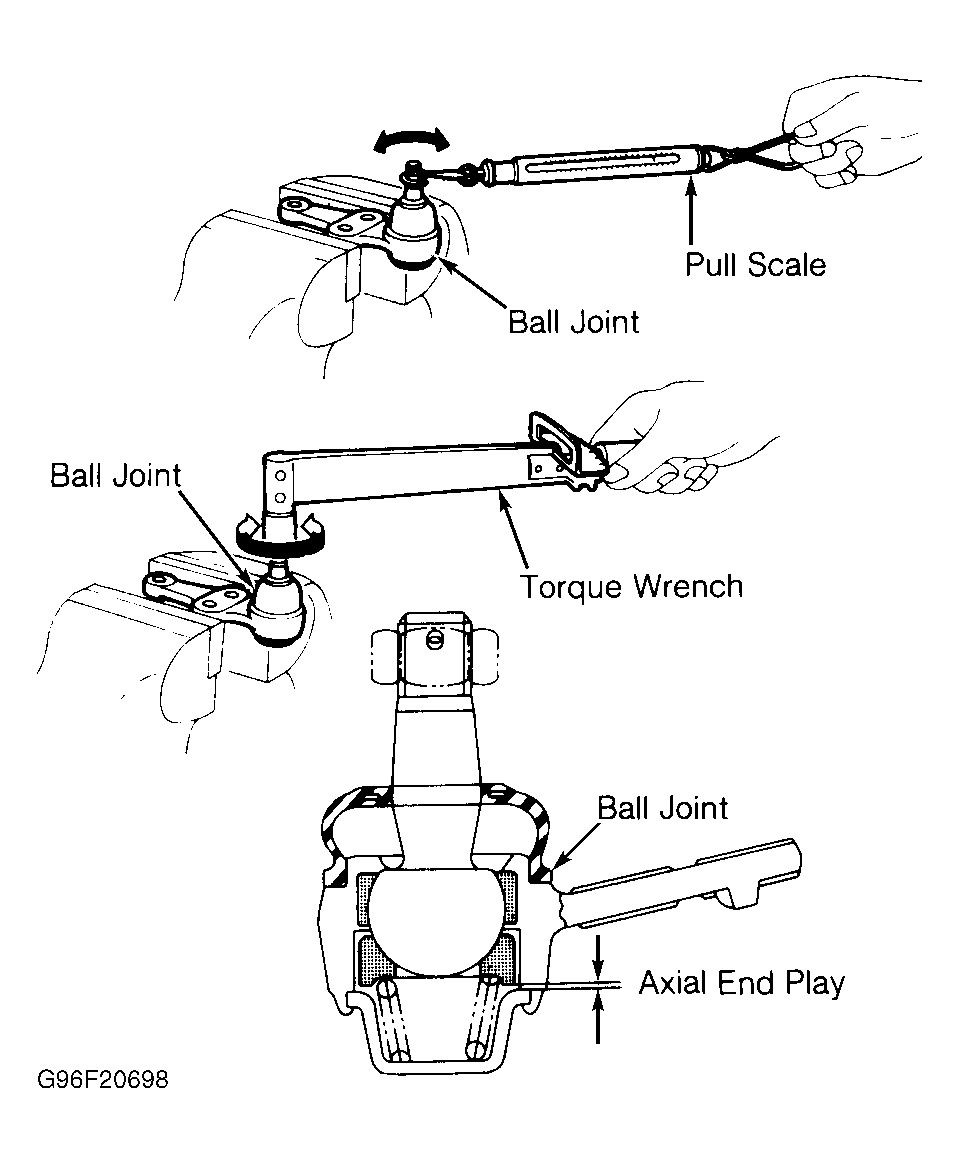 Courtesy of NISSAN MOTOR CO., U.S.A.