Combination Meter
WARNING: This page is about a different car, the 2003 Lexus ES 300 and 2002 Lexus ES 300. However, it is still accessible from the selected car via links, so may be relevant.
NOTE:
Combination Meter may also be referred to as an Instrument Panel.
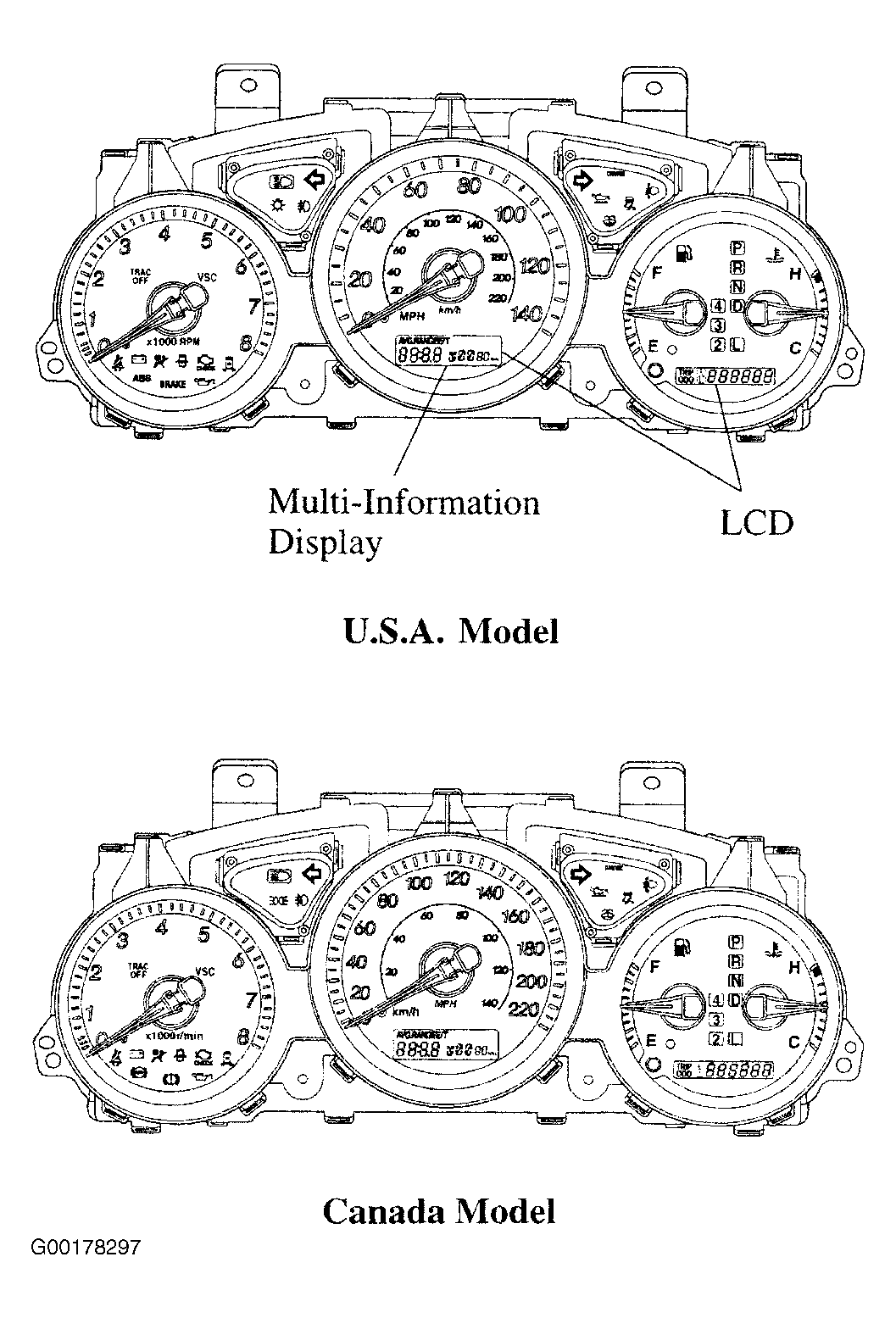
An optitron display type combination meter has been adopted. See Fig 1. The optitron display type meter realizes excellent visibility through the use of smoke acylic in the protective panel, and LEDs (Light Emitting Diodes) that are very bright and have high contrast for illuminating the indicator and the dial. An odometer and trip meter that use an LCD (Liquid Crystal Display) has been adopted. The multi-information display has been provided below the speedometer.
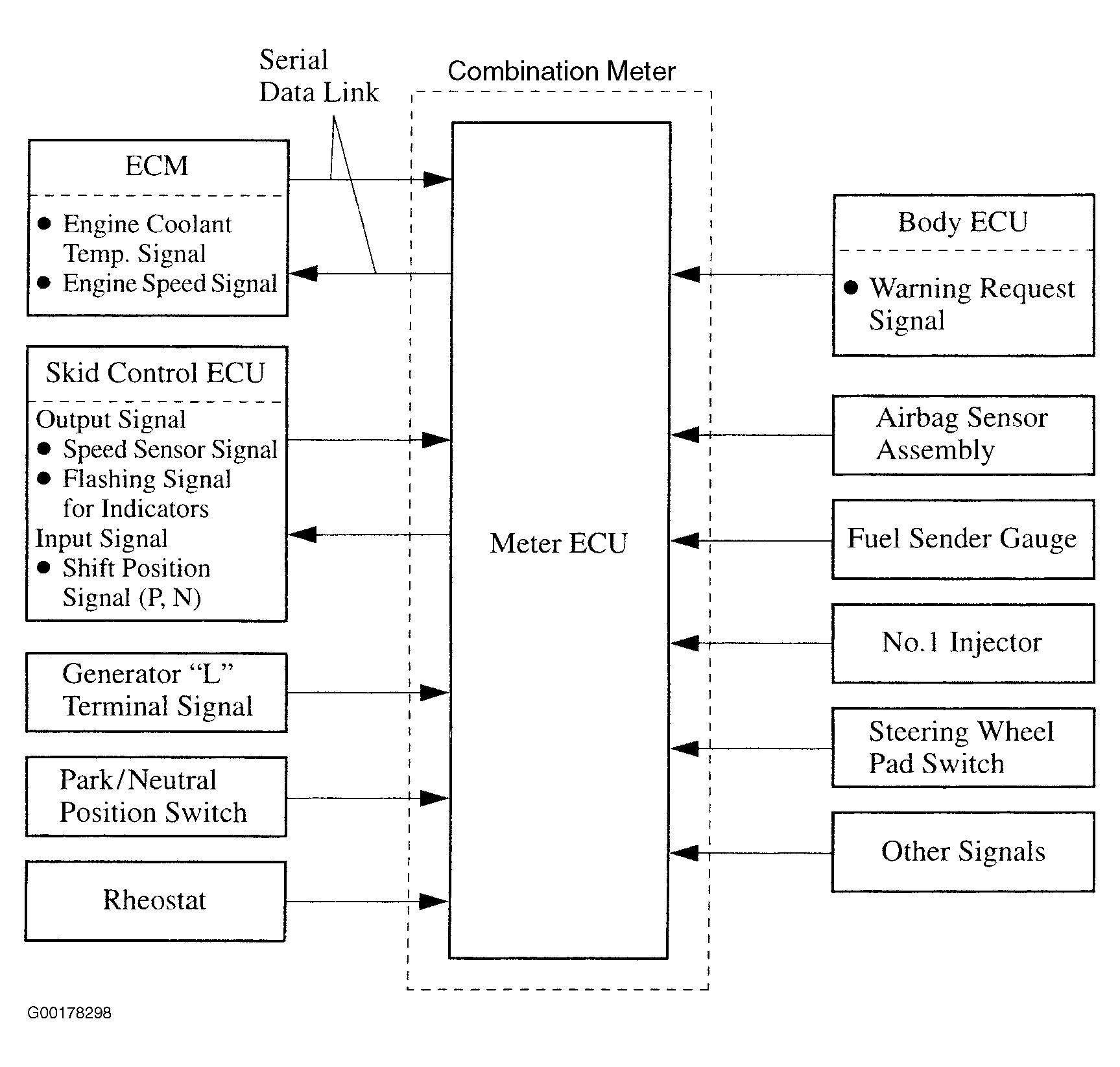
The combination meter has a built-in meter ECU and buzzer for key reminder. See Fig 2. This meter ECU receives the engine coolant temperature signal and the engine speed signal by establishing communication with the ECM via a serial data link. Furthermore, the meter ECU receives various pieces of information that are necessary for it's operation from the sensors and switches. This meter ECU flashes it's warning lights even if an open circuit occurs in the wiring harness, which are connected to the ECUs for the purpose of flashing the ABS warning light, brake system warning light and the SRS air bag warning light.
The following pieces of information appear on the multi-information display: instant fuel consumption, average fuel consumption, drivable distance, average vehicle speed and elapsed time. The display functions can be switched by operating the steering wheel pad switch. See MULTI-INFORMATION DISPLAY table.
MULTI-INFORMATION DISPLAY
| Item |
Display Contents |
Outline |
| Average Vehicle Speed |
32.8 MPH |
|
| Average Fuel Consumption |
24.4 MPG |
|
| Instant Fuel Consumption |
21.4 MPG |
|
| Elapsed Time |
12:45 |
|
| Drivable Distance |
349 MI |
|
 Courtesy of © TOYOTA, LICENSE AGREEMENT TMS1002
 Courtesy of © TOYOTA, LICENSE AGREEMENT TMS1002