Radiator (Cooling) Fan Control Test (1.6L M/T & 2.0L M/T)
- For vehicles equipped with A/C, start engine and warm to operating temperature. Set temperature lever to full cold. Turn A/C switch on. Turn fan switch on. Run engine at idle with A/C on for several minutes. Ensure radiator fan operates. If radiator fan does not operate, turn A/C and fan switches off. Go to step 3). If radiator fan operates, system is functioning properly.
- For vehicles without A/C, start engine. Keep engine speed at approximately 2000 RPM until engine is warmed up. Radiator fan should begin to operate during warm-up. If radiator fan does not operate, go to next step. If radiator fan operates, system is functioning properly.
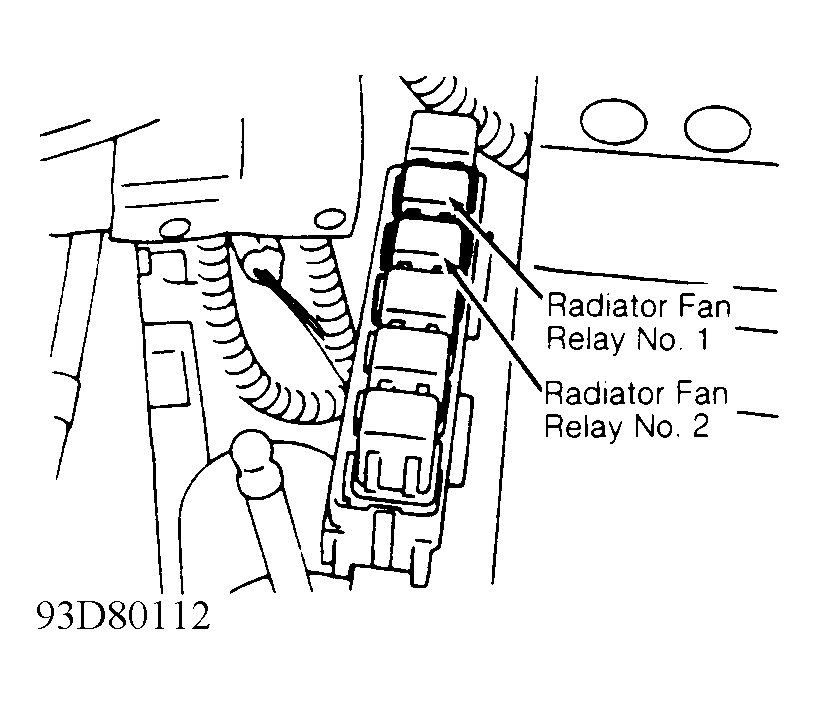
- Turn ignition off. Disconnect radiator fan relay No. 1. See Fig 1
-Fig 3
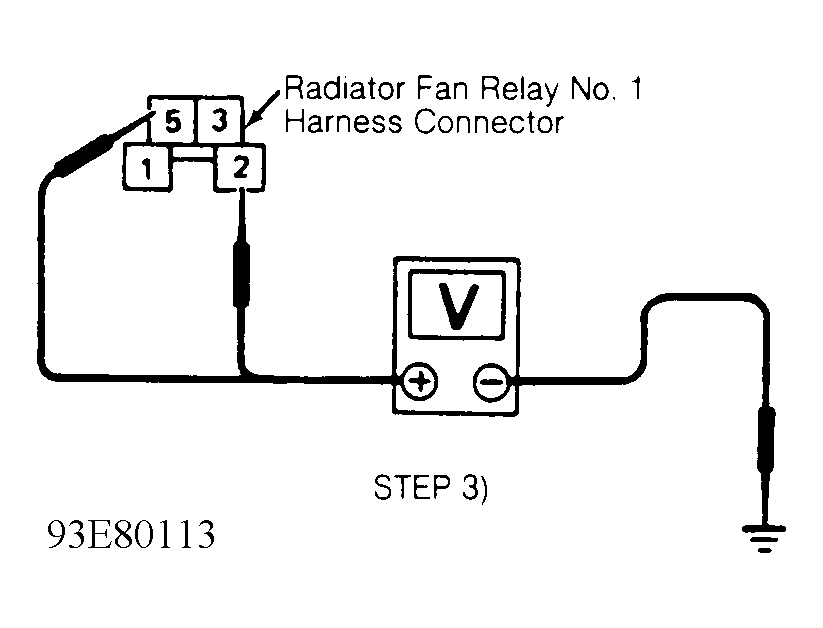
. Turn ignition on. Measure voltage between ground and radiator fan relay No. 1 harness connector terminals No. 2 (White/Green wire) and No. 5 (Black/White wire). See Fig 1
-Fig 3
. Battery voltage should be present. If battery voltage is present, go to step 5). If battery voltage is not present, go to next step.
- Check 10-amp fuse located in fuse box under left instrument panel. Replace fuse as necessary. Check 30-amp fusible link located in fusible link and fuse box next to battery. Check Gray in-line fusible link near battery positive terminal. Replace fusible link(s) as necessary. If fuse and fusible links are okay, repair open in harness or connectors.
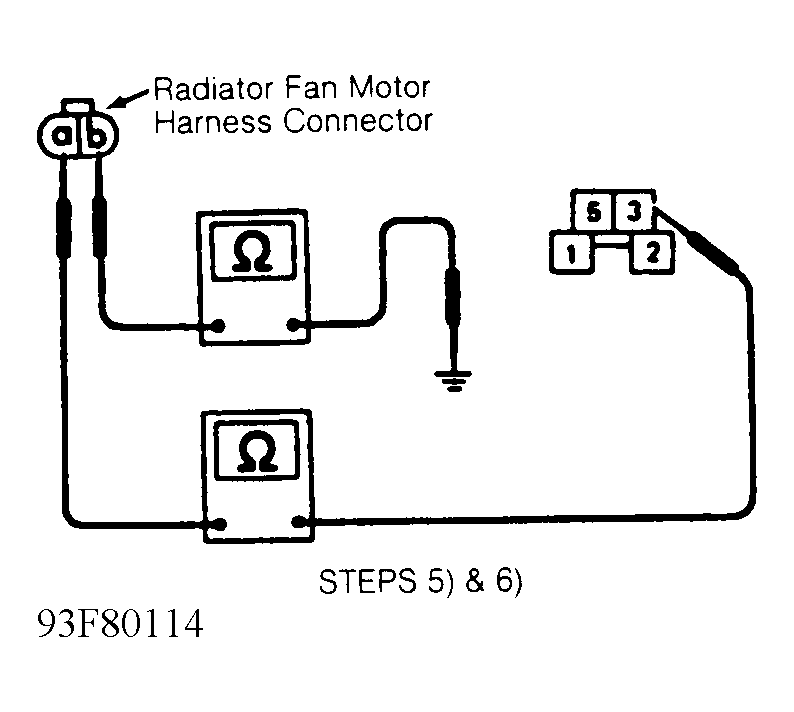
- Turn ignition off. Disconnect radiator fan motor No. 1 and radiator fan motor No. 2 harness connectors. Check continuity between radiator fan motor No. 1 harness connector terminal "a" (Brown/White wire) and radiator fan relay No. 1 harness connector terminal No. 3 (Brown/White wire). Check continuity between radiator fan motor No. 2 harness connector terminal "a" (Brown/White wire) and radiator fan relay No. 1 harness connector terminal No. 3 (Brown/White wire). See Fig 1
-Fig 3
.
- Check continuity between radiator fan motor No. 1 harness connector terminal "b" (Black wire) and ground. Check continuity between radiator fan motor No. 2 harness connector terminal "b" (Black wire) and ground. See Fig 1
-Fig 3
. Continuity should exist in all checks. If continuity exists in all checks, go to next step. If continuity does not exist in any check, repair open in appropriate wire or connector.
- Disconnect ECM harness connector. ECM is located under center of instrument panel. Check continuity between ECM harness connector terminal No. 9 (Blue wire) and radiator fan relay No. 1 harness connector terminal No. 1 (Blue wire). See Figure
and Fig 1
-Fig 3
. Continuity should exist. If continuity exists, go to next step. If continuity does not exist, repair open in Blue wire or connectors between ECM and relay.
- Check radiator fan relay No. 1. See RELAYS
under RELAYS & SOLENOIDS. Replace relay as necessary. If relay is okay, check fan motors. See CONDENSER FAN MOTOR TEST. Replace motor as necessary. If fan motor is okay, check ECM and ECM harness connector for damage, corrosion or improper connection. Repair as necessary.
 Courtesy of NISSAN MOTOR CO., U.S.A.
 Courtesy of NISSAN MOTOR CO., U.S.A.
 Courtesy of NISSAN MOTOR CO., U.S.A.