Power Steering System Bleeding
- Jack up the front wheels and support them.
- Disconnect the ignition coil connector.
- Turn the steering wheel all the way to the left and right five or six times while using the starter motor to crank the engine intermittently several times (for 15 to 20 seconds).
CAUTION:
- During air bleeding, fill fluid so that its level is always higher than the MIN line on the oil reservoir.
- If the air bleeding is performed by operating the engine, air will break into small particles and melt into fluid. Be sure to perform the air bleeding while cranking the engine.
- If the steering wheel is turned all the way to the right and left at the engine stop condition, the fluid may leak from the reservoir or the reservoir cap may pop out. Perform air bleeding while cranking the engine.
- Connect the ignition coil. Start the engine (idling).
- Turn the steering wheel to the left and right until there are no air bubbles in the oil reservoir.
- Confirm that the fluid is not milky, and that the level is between the high and low dipstick marks.
- Confirm that there is very little change in the fluid level when the steering wheel is turned left and right.
- Confirm that the change in the fluid level is no more than 5 mm (0.2 inch) when the engine is stopped and when it is running.
CAUTION:
- If the fluid level rises suddenly after the engine is stopped, the air has not been completely bled.
- If air bleeding is not complete, there will be abnormal noises from the pump and the flow-control valve, and this condition could cause reduce the life of the power steering components.
- If the change of the fluid level is 5 mm (0.2 inch) or more, the air has not been completely bled from the system. Air bleeding procedure must be repeated.
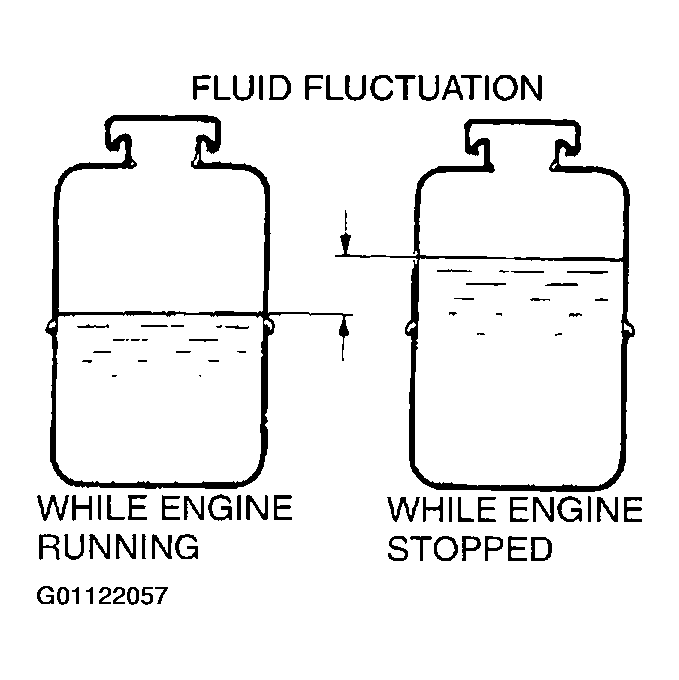 Courtesy of MITSUBISHI MOTOR SALES OF AMERICA.