Crank Angle Sensor: Operation
- The crank angle sensor functions to detect the crank angle (position) of each cylinder, and to convert those data to pulse signals, which are then input to the engine control unit. The engine control unit, based upon those signals, calculates the engine RPM, and also regulates the fuel injection timing and the ignition timing.
- The power for the crank angle sensor is supplied from the control relay and is grounded to the vehicle body. The crank angle sensor, by intermitting the flow (to ground) of the 5-volt signal applied from the engine control unit, produces pulse signals. See Fig 1
.
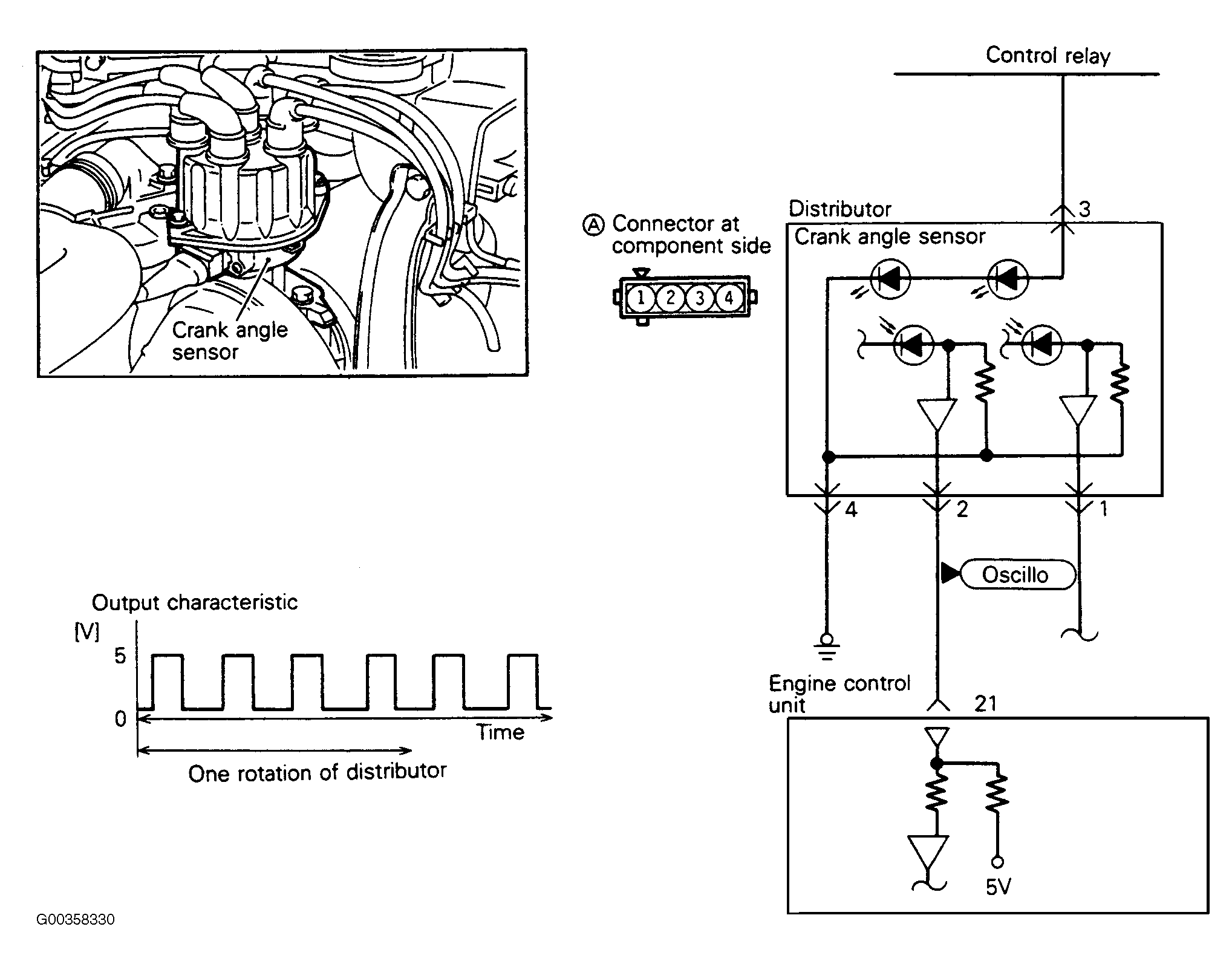 Courtesy of MITSUBISHI MOTOR SALES OF AMERICA.