Upstream Heated Oxygen Sensor (Ho2S)
NOTE:
The following test procedures are for DTCs P0133 and P0153.
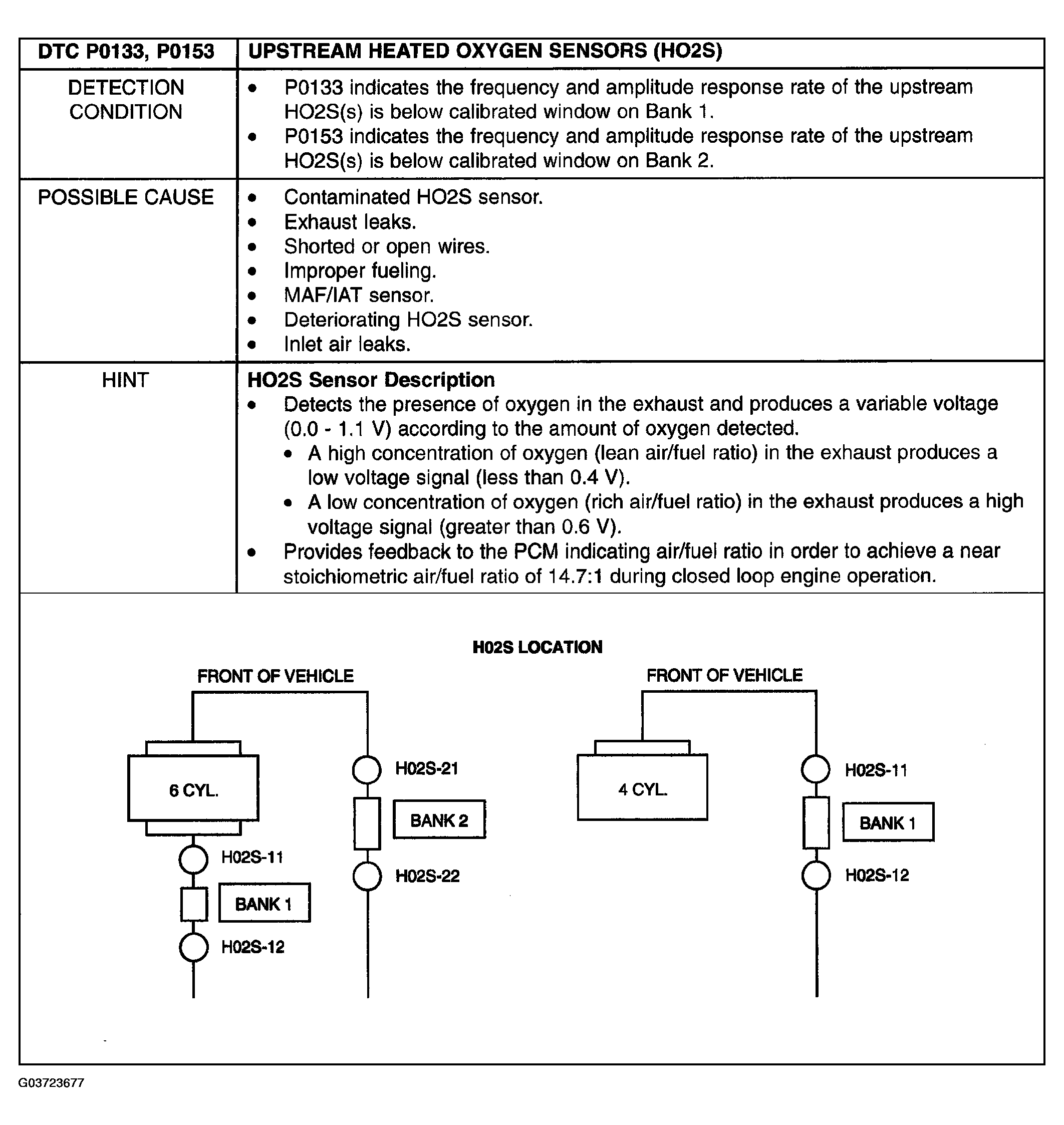 Courtesy of MAZDA MOTORS CORP.
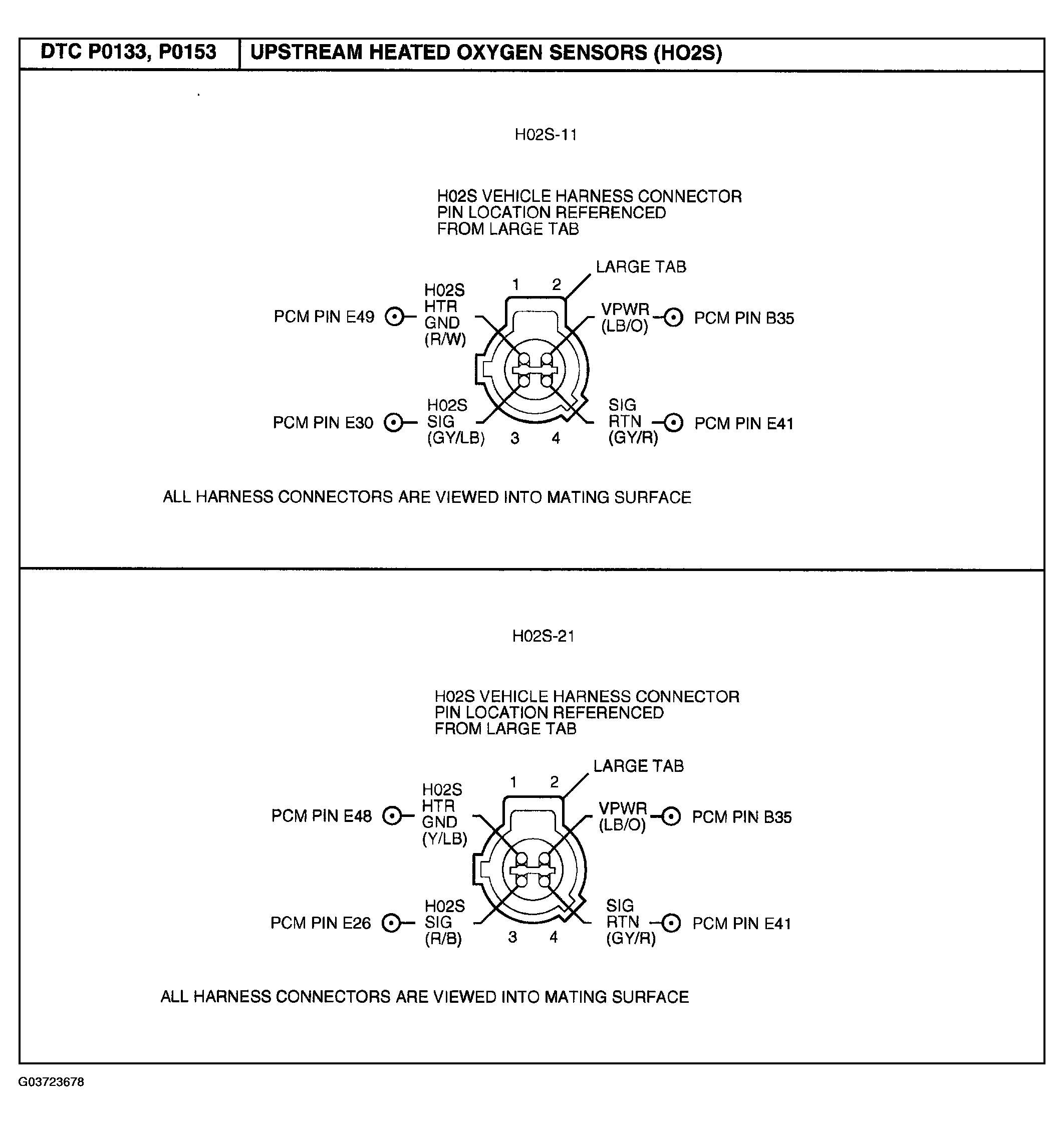 Courtesy of MAZDA MOTORS CORP.
 UPSTREAM HEATED OXYGEN SENSOR (HO2S) INSPECTION/ACTION CHART
| STEP |
INSPECTION |
ACTION |
| 1 |
- Was PCM Quick Test performed?
|
Yes |
Go to next step. |
| No |
Perform PCM Quick Test. See
PCM QUICK TEST
. |
| 2 |
CHECK FOR SOURCE OF POTENTIAL HO2S CONTAMINATION
- Investigate the following items as potential sources of HO2S contamination:
- Use of unapproved silicone sealers.
- Fuel contaminated with silicone additives.
- Excessive oil burning (i.e., rings, valve seals and/or oil overfill).
- Engine coolant leaking internally in the engine.
- Lead contaminated fuel.
- Short drive cycles in cold weather.
- Use of unapproved cleaning agents.
- Are any of the above conditions present?
|
Yes |
Repair source of contamination.
Replace HO2S and oil and filter.
See
HEATED OXYGEN SENSOR (HO2S) AND CATALYST MONITOR SENSOR - 3.0L (4V)
, or
HEATED OXYGEN SENSOR (HO2S) AND CATALYST MONITOR SENSOR - 2.3L
.
Go to step 7. |
| No |
Go to next step. |
| 3 |
CHECK FOR UNMETERED AIR LEAKS
NOTE:
- Fuel calculations can be affected by unmetered air leaks.
- Carefully inspect the following areas for potential air leaks:
- Hoses connecting MAF/IAT sensor assembly.
- Hoses connecting to throttle body.
- Intake manifold gasket leaks.
- PCV disconnected.
- Vacuum lines disconnected.
- Improperly seated dipstick tube and oil filler cap.
- Exhaust leaks at flanges and gaskets.
- Are there any air leaks?
|
Yes |
Repair source of air leak.
Go to step 7. |
| No |
Go to next step. |
| 4 |
CHECK HO2S CIRCUIT CONTINUITY
- Disconnect suspect HO2S sensor.
- Jumper HO2S pin 3 to pin 2 at the HO2S sensor harness connector.
- Key ON, Engine Running (KOER).
- Access the HO2S PID.
- Is the voltage greater than 1.0 volt?
|
Yes |
Key OFF.
Replace the suspect HO2S sensor.
Change engine oil and filter.
Go to step 7. |
| No |
Key OFF.
Go to next step. |
| 5 |
CHECK HO2S FOR OPEN IN HARNESS
- Remove jumper wire.
- Disconnect PCM.
- Install Breakout Box, leave PCM disconnected.
- Use the following list to measure resistance between the appropriate PCM test pin and the appropriate HO2S sensor connector pin, harness side:
- For DTC P0133, test pin E30 and HO2S pin 3; and test pin E41 and HO2S pin 4.
- For DTC P0153, test pin E26 and HO2S pin 3; and test pin E41 and HO2S pin 4.
- Are the resistances less than 5.0 ohms?
|
Yes |
Go to next step. |
| No |
Repair open circuit.
Go to step 7. |
| 6 |
CHECK FOR SHORT TO VPWR IN HARNESS
- Measure resistance between PCM test pin E30 (DTC P0133) or PCM test pin E26 (DTC P0153) and PCM test pin B35.
- Is the resistance greater than 10K ohms?
|
Yes |
Go to next step. |
| No |
Repair short circuit.
Go to next step. |
| 7 |
DRIVE CYCLE
- Make sure to reconnect all disconnected connectors.
- Clear DTCs from PCM memory using WDS or equivalent tester generic OBD II function.
- Perform Fuel Monitor or HO2S Monitor Drive Cycle.
DRIVE CYCLE
.
- Retrieve pending code.
- Is same DTC present?
|
Yes |
Replace PCM.
See
POWERTRAIN CONTROL MODULE (PCM)
.
Go to next step. |
| No |
Go to next step. |
| 8 |
VERIFY TROUBLESHOOTING OF DTCs COMPLETED
|
Yes |
Go to applicable DTC inspection. |
| No |
Troubleshooting complete. |