Accumulator Control Valve C: Operation
- Spring force and high clutch solenoid valve pressure (18) are applied to the bottom end of the valve and push the valve upward. Conversely, accumulator control pressure (22) is applied to the top end of the valve and pushes the valve downward.
- Accumulator control pressure (22) and high clutch solenoid valve pressure (18) maintain the balance. By this balance, line pressure (5) is depressurized and adjusted to accumulator control pressure (22). When accumulator control pressure (22) is lower than high clutch solenoid valve pressure (18), the valve moves upward and opens line pressure oil passage (5) (See figure). This causes the line pressure to flow through oil passage (5) to oil passage (22) and pressurizes accumulator control pressure (22). Pressurized accumulator control pressure (22) moves the valve downward and closes line pressure (5) oil passage. This causes accumulator control pressure (22) to not pressurized.
- When accumulator control pressure (22) is higher than high clutch solenoid valve pressure (18), the valve moves downward and opens drain port (X). This causes accumulator control pressure (22) to depressurize. When accumulator control pressure (22) is depressurized, the force to push the valve downward decreases, the valve moves upward and closes drain port (X). This causes accumulator control pressure (22) to not depressurize. Thus, accumulator control pressure (22) adjusts according to the change in the high clutch solenoid valve pressure.
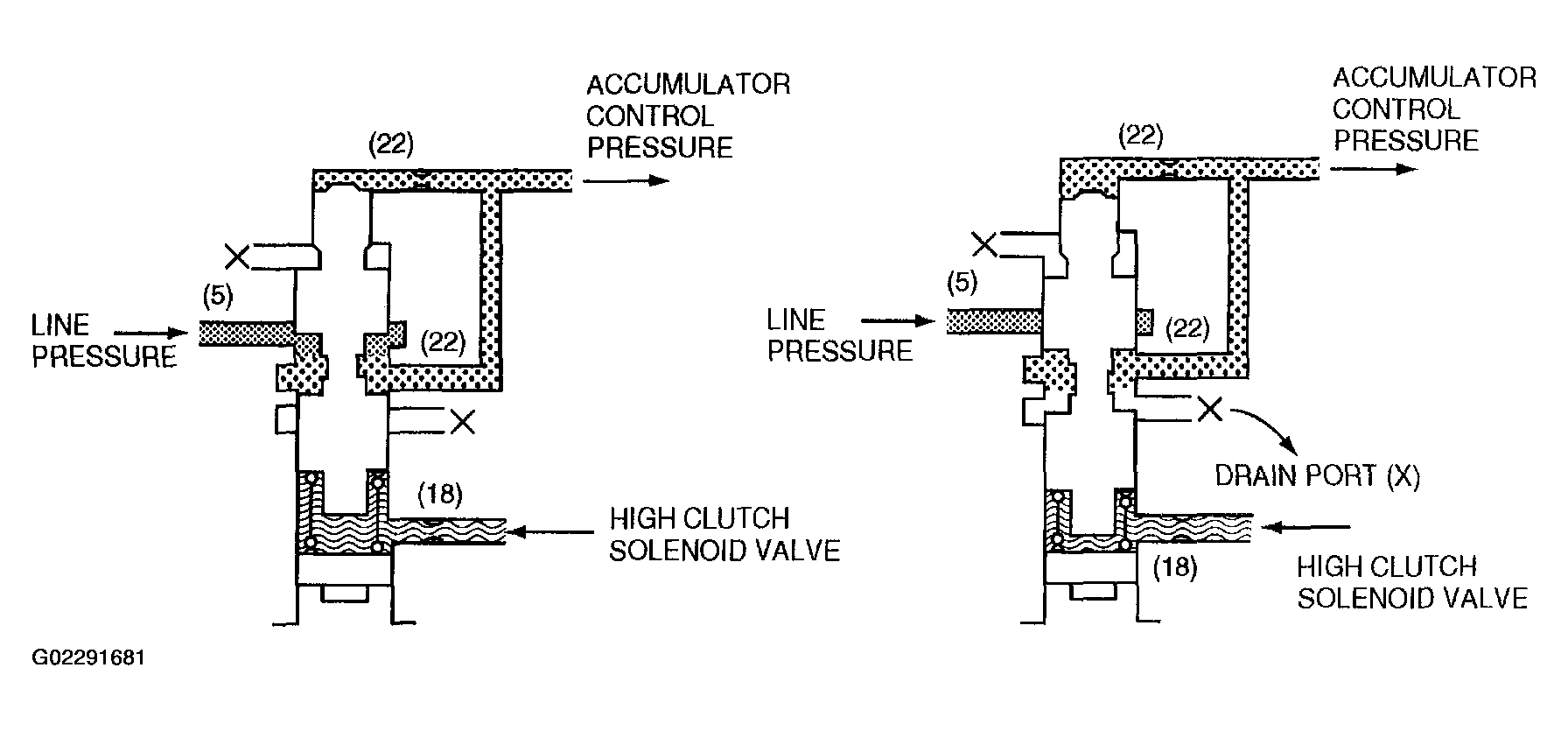 Courtesy of MAZDA MOTORS CORP.