Torque Converter Pressure Regulator Valve: Operation
- Spring force is applied to the bottom end of the valve and pushes the valve upward. Conversely, torque converter pressure (46) is applied to the top end of the valve and pushes the valve downward. Torque converter pressure (46) and the spring force maintain the balance. By this balance, line pressure (6) is depressurized and adjusted to torque converter pressure (46).
- When torque converter pressure (46) is lower than spring force, the valve moves upward and opens line pressure oil passage (6). This causes the line pressure to flow through oil passage (6) to oil passage (46) and pressurizes torque converter pressure (46). Pressurized torque converter (46) moves the valve downward and closes line pressure (6) oil passage. This causes torque converter pressure (46) to pressurize.
- When torque converter pressure (46) is greater than spring force, the valve moves downward and closes drain port (X). This causes torque converter pressure (46) to depressurize. When torque converter (46) is depressurized, the force to push the valve decreases and the valve moves upward and closes drain port (X). This causes torque converter pressure (46) to not depressurize. Thus, torque converter pressure (46) is adjusted according to the balance of the spring force.
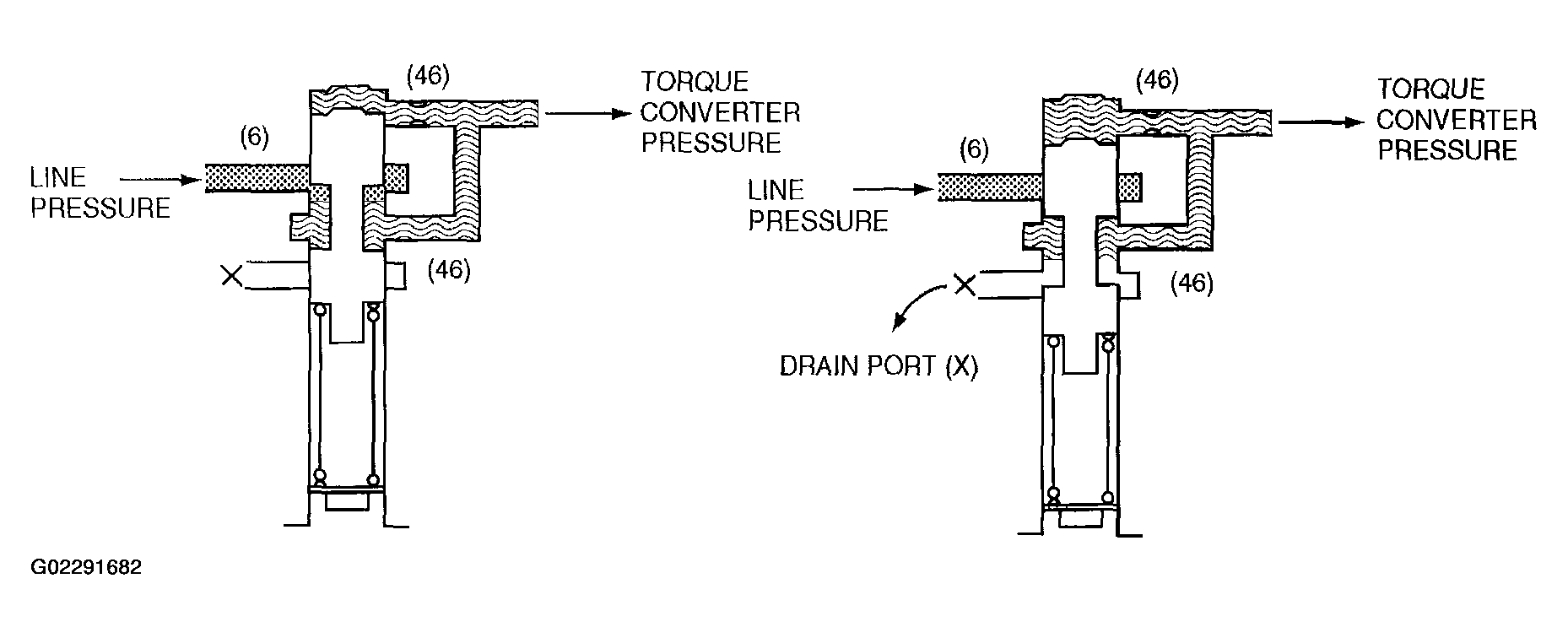 Courtesy of MAZDA MOTORS CORP.