Central Processing Unit (CPU): Millenia
- Locate CPU unit behind left kick panel. Leave CPU connector attached. Using DVOM, measure voltage at specified terminals of CPU connector (backprobe connector). See Fig 1
. See appropriate CPU CONNECTOR PIN VOLTAGES & CONTINUITY table. Disconnect CPU connector and check continuity at specified terminals.
- If voltage or continuity are not as specified, check related components and wiring harnesses. If related components and wiring harnesses are okay, but system is still not functioning properly, replace CPU. See CENTRAL PROCESSING UNIT (CPU)
under REMOVAL & INSTALLATION.
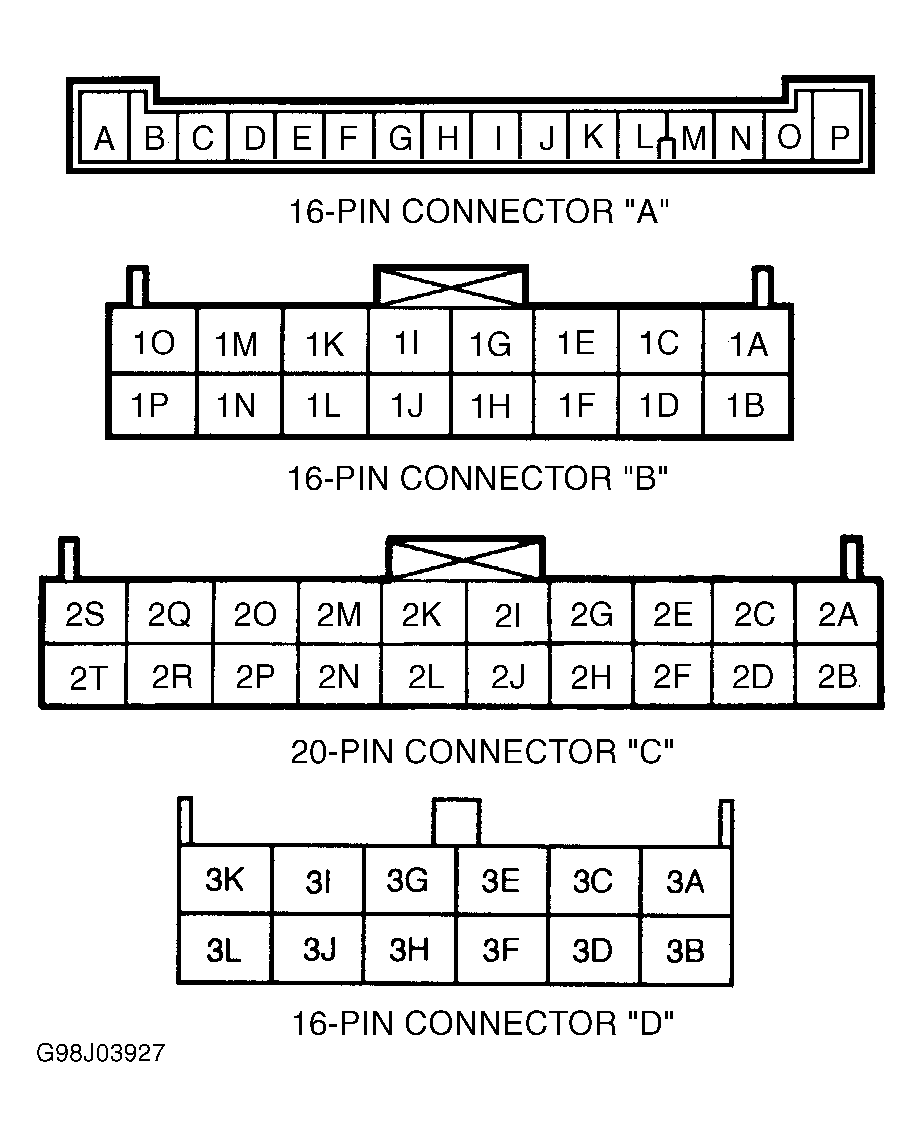 Courtesy of MAZDA MOTORS CORP.
 CPU CONNECTOR PIN VOLTAGES & CONTINUITY (CONNECTOR "A")
| Terminal |
Specification Or Condition |
| A (Hood Switch) |
| Hood Closed |
No Continuity |
| Hood Open |
Continuity |
| B (Starter Cut Relay), Constant |
Battery Voltage |
| C (10-Amp RADIO Fuse), Constant |
Battery Voltage |
| D |
Not Used |
| E (Rear Door Switch) |
| Rear Doors Closed |
No Continuity |
| Any Rear Door Open |
Continuity |
| F (Horn Relay) |
| Horn Sounding |
No Voltage |
| Other |
Battery Voltage |
| G (CPU Ground), Constant |
Continuity |
| H (Key Reminder Switch) |
| Key Inserted |
Battery Voltage |
| Key Removed |
No Voltage |
| I |
Not Used |
| J (15-Amp ROOM Fuse), Constant |
Battery Voltage |
| K (Interior & Spot Light) |
| Switch In Door Position |
Battery Voltage |
| Other |
No Voltage |
| L (TNS Relay) |
| Headlights On |
Battery Voltage |
| Other |
No Voltage |
| N (15-Amp METER Fuse), Constant |
Battery Voltage |
| O |
Not Used |
| P |
Not Used |
CPU CONNECTOR PIN VOLTAGES & CONTINUITY (CONNECTOR "B")
| Terminal |
Specification Or Condition |
| 1A |
Not Used |
| 1B (Trunk Key Cylinder Switch) |
| Locked |
No Continuity |
| Unlocked |
Continuity |
| 1C (Headlight Relay) |
| Headlights Off |
Battery Voltage |
| Headlights On |
No Voltage |
| 1D (Trunk Compartment Light Switch) |
| Trunk Lid Closed |
Battery Voltage |
| Trunk Lid Open |
No Voltage |
| 1E (Flasher Unit) |
| Hazard Switch Off |
Battery Voltage |
| Hazard Switch On |
No Voltage |
| 1F |
Not Used |
| 1G (Door Lock Timer Unit) |
| 0.4 Sec. After Door Locked |
No Voltage |
| Other |
Battery Voltage |
| 1H |
Not Used |
| 1I (Door Lock Timer Unit) |
| 0.4 Sec. After Door Unlocked |
No Voltage |
| Other |
Battery Voltage |
| 1J |
Not Used |
| 1K |
Not Used |
| 1L (Fog Light Relay) |
| Fog Light Switch On |
No Voltage |
| Fog Light Switch Off |
Battery Voltage |
| 1M (Fog Light Switch - On) |
| Fog Light Switch Pushed |
Continuity |
| Fog Light Switch Released |
No Continuity |
| 1N (Fog Light Switch - Off) |
| Fog Light Switch Pushed |
Continuity |
| Fog Light Switch Released |
No Continuity |
| 1O |
Not Used |
| 1P (Keyless Unit), Not Operating |
5 Volts |
CPU CONNECTOR PIN VOLTAGES & CONTINUITY (CONNECTOR "C")
| Terminal |
Specification Or Condition |
| 2A (Key Interlock Solenoid), Ignition On |
| Selector In "R" Position |
No Voltage |
| Selector In "P" Position |
Battery Voltage |
| 2B (Key Interlock Solenoid), Ignition On |
| Selector In "P" Position |
Battery Voltage |
| Selector Not In "P" Position |
No Voltage |
| 2C ("P" Range Switch), Ignition On |
| Selector In "P" Position |
5 Volts |
| Selector Not In "P" Position |
No Voltage |
| 2D (Passenger's Door Switch) |
| Door Closed |
No Continuity |
| Door Open |
Continuity |
| 2E |
Not Used |
| 2F |
Not Used |
| 2G (Trunk Lid Opener Relay) |
| .27 Sec. After TRUNK Pressed |
No Voltage |
| Other |
Battery Voltage |
| 2H (Driver's Door Lock Link Switch) |
| Locked |
5 Volts |
| Unlocked |
No Voltage |
| 2L (Door Lock Switch) |
| Locked |
2.5 Volts |
| Unlocked |
No Voltage |
| Other |
5 Volts |
| 2M (Security Light) |
| Light Off |
Battery Voltage |
| Light On |
No Voltage |
| 2N |
Not Used |
| 2O |
Not Used |
| 2P (Passenger's Door Key Cylinder Switch) |
| Locked |
2.5 Volts |
| Unlocked |
No Voltage |
| Other |
5 Volts |
| 2Q |
Not Used |
| 2R (Driver's Door Key Cylinder Switch) |
| Locked |
2.5 Volts |
| Unlocked |
No Voltage |
| Other |
5 Volts |
| 2S |
Not Used |
| 2T (Driver's Door Switch) |
| Door Closed |
No Continuity |
| Door Open |
Continuity |
CPU CONNECTOR PIN VOLTAGES & CONTINUITY (CONNECTOR "D")
| Terminal |
Specification Or Condition |
| 3A (Parking Brake Switch) |
| Parking Brake On |
Continuity |
| Parking Brake Released |
No Continuity |
| 3B (Keyless Unit), Not Operating |
1.28 K/Ohms |
| 3C (Door Lock Timer Unit) |
| .4 Sec. After UNLOCK (Driver) Pressed |
No Voltage |
| Other |
Battery Voltage |
| 3D |
Not Used |
| 3E (DRL Relay) |
| Parking Brake On |
Battery Voltage |
| Parking Brake Released |
No Voltage |
| 3F (Tilt Switch), Ignition On |
| Auto Switch On |
Continuity |
| Auto Switch Off |
No Continuity |
| 3G (Tilt Relay), Ignition On |
| Manual Switch In Up Position |
No Voltage |
| Other |
Battery Voltage |
| 3H (Tilt Switch), Ignition On |
| Manual Switch In Up Position |
Continuity |
| Manual Switch In Down Position |
Continuity |
| Other |
No Continuity |
| 3I (Tilt Relay), Ignition On |
| Manual Switch In Down Position |
No Voltage |
| Other |
Battery Voltage |
| 3J (Tilt Sensor), Ignition On |
.8-1.2 K/Ohms |
| 3K (Tilt Sensor), Ignition On |
.28-.91 K/Ohms |
| 3L (Tilt Sensor), Ignition On |
No Voltage |