- Ensure transmission is in Park. Turn ignition switch to LOCK position. Check central junction box fuse No. 30 (7.5-amp). If fuse is okay, go to next step. If fuse is blown, go to step 5
.
- Measure voltage at input side of central junction box fuse No. 30 (7.5-amp). If battery voltage exists, go to next step. If battery voltage does not exist, go to step 20
.
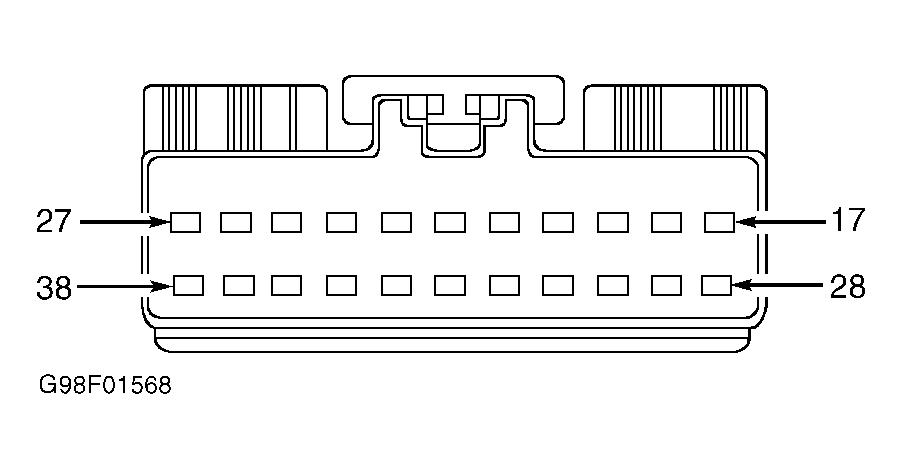
- Remove central junction box fuse No. 30 (7.5-amp). Disconnect Driver's Door Module (DDM) 22-pin harness connector C520. DDM is located behind door panel, in upper front corner of driver's door. Measure resistance in Light Green/Violet wire between DDM 22-pin harness connector C520 terminal No. 29 and output side of central junction box fuse No. 30. See Fig 1
. If resistance is less than 5 ohms, go to next step. If resistance is 5 ohms or more, repair open in Light Green/Violet wire between central junction box and DDM.
 Courtesy of FORD MOTOR CO.
- Measure resistance between ground and DDM 22-pin harness connector C520 terminal No. 23 (Pink/Orange wire). If resistance is or less 5 ohms, repair module communications concern. See MODULE COMMUNICATIONS NETWORK - TOWN CAR article. If resistance is 5 ohms or more, repair open in Pink/Orange wire between ground and DDM. Ground point is located behind driver's kick panel, near door frame.
- Replace central junction box fuse No. 30 (7.5-amp). DO NOT operate any switches. If fuse blows, go to next step. If fuse does not blow, go to step 9
.
- Remove central junction box fuse No. 30 (7.5-amp). Disconnect Driver's Door Module (DDM) 22-pin harness connector C520 and Driver's Seat Module (DSM) 26-pin harness connector C313. DDM is located behind door panel, in upper front corner of driver's door. DSM is located under driver's seat. Measure resistance between ground and DDM 22-pin harness connector C520 terminal No. 29 (Light Green/Violet wire). See Fig 1
. If resistance is less than 10 k/ohms, go to next step. If resistance is 10 k/ohms or more, go to step 8
.
- Test door lock switches, remote trunk release switch, exterior mirror control switch and seat control switches. If no switch is defective, repair short to ground in Light Green/Violet wire, between central junction box and DDM. If any switch is defective, replace appropriate switch.
- Connect DSM 26-pin harness connector C313. Measure resistance between ground and DDM 22-pin harness connector C520 terminal No. 29 (Light Green/Violet wire). If resistance is 10 k/ohms or more, replace DDM. If resistance is less than 10 k/ohms, replace DSM.
- Lock and unlock doors at all door lock switches. If central junction box fuse No. 30 (7.5-amp) blows, go to next step. If central junction box fuse No. 30 does not blow, go to step 12
.
- Remove door lock switches. Test all door lock switches. See DOOR LOCK SWITCH
under COMPONENT TESTS. If all door lock switches are okay, go to next step. If any door lock switch is defective, replace appropriate door lock switch.
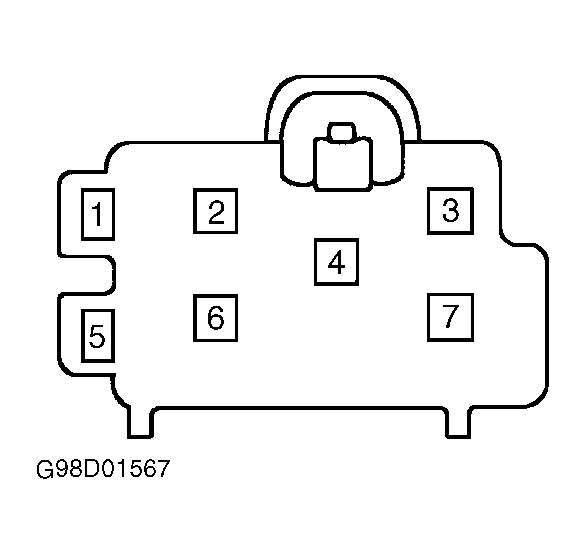
- Disconnect Driver's Door Module (DDM) 22-pin harness connector C520. DDM is located behind door panel, in upper front corner of driver's door. Disconnect driver's door lock switch harness connector C503. Disconnect passenger's door lock switch harness connector C603. Measure resistance between ground and driver's door lock switch harness connector C503 terminal No. 2 (Pink/Yellow wire). See Fig 2
. Measure resistance between ground and driver's door lock switch harness connector C503 terminal No. 6 (Pink/Light Green wire). If either resistance is less than 10 k/ohms, repair short to ground in appropriate wire(s). If both resistances are 10 k/ohms or more, replace DDM. Restore harness connections and test system for normal operation.
 Courtesy of FORD MOTOR CO.
- Activate mirrors in all directions. If central junction box fuse No. 30 (7.5-amp) blows, go to next step. If central junction box fuse No. 30 does not blow, go to step 15
.
- Remove exterior mirror control switch. See EXTERIOR MIRROR SWITCH under REMOVAL & INSTALLATION in POWER MIRRORS - TOWN CAR article. Test exterior mirror control switch. See EXTERIOR MIRROR CONTROL SWITCH under COMPONENT TESTS in POWER MIRRORS - TOWN CAR article. If exterior mirror control switch is okay, go to next step. If exterior mirror control switch is defective, replace exterior mirror control switch. Retest system for normal operation.
- Disconnect Driver's Door Module (DDM) 22-pin harness connector C520. DDM is located behind door panel, in upper front corner of driver's door. Disconnect exterior mirror switch control harness connector C550. Measure resistance between ground and appropriate terminals at DDM 22-pin harness connector C520. See EXTERIOR MIRROR CONTROL SWITCH CIRCUIT IDENTIFICATION
table. See Fig 1
. If all resistances are 10 k/ohms or more, replace DDM. If any resistance is less than 10 k/ohms, repair short to ground in appropriate wire. Restore harness connections and test system for normal operation.
EXTERIOR MIRROR CONTROL SWITCH CIRCUIT IDENTIFICATION
| Terminal No. |
Wire Color |
| 18 |
Yellow/Black |
| 19 |
Dark Blue/Orange |
| 30 |
Red/Orange |
| 31 |
Violet/Orange |
| 32 |
Dark Green/Orange |
- Activate memory switch through all positions. If central junction box fuse No. 30 (7.5-amp) blows, go to next step. If central junction box fuse No. 30 does not blow, go to step 18
.
- Remove driver's seat control switch from switch panel in door. Test memory portion of driver's seat control switch. See DRIVER'S SEAT CONTROL SWITCH (WITH MEMORY)
under COMPONENT TESTS. If memory switch is okay, go to next step. If memory switch is defective, replace driver's seat control switch. Restore harness connections and test system for normal operation.
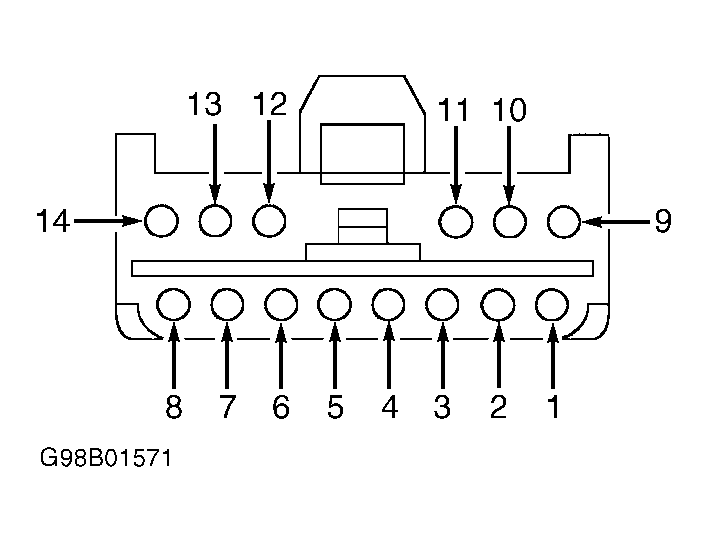
- Disconnect DDM 22-pin harness connector C520 and 16-pin harness connector C521. DDM is located behind door panel, in upper front corner of driver's door. Disconnect driver's seat control switch harness connector C509. Measure resistance between ground and appropriate terminals at driver's seat control switch harness connector C509. See SEAT SWITCH CIRCUIT TERMINAL IDENTIFICATION
table. See Fig 3
. If all resistances are 10 k/ohms or more, replace DDM. If any resistance is less than 10 k/ohms, repair short to ground in appropriate wire. Restore harness connections and test system for normal operation.
SEAT SWITCH CIRCUIT TERMINAL IDENTIFICATION
| Terminal No. |
Wire Color |
| 4 |
White/Orange |
| 5 |
Brown/Orange |
| 6 |
Brown/Light Green |
| 7 |
Black/Orange |
 Courtesy of FORD MOTOR CO.
- Activate driver's seat control switch in all directions. If central junction box fuse No. 30 blows (7.5-amp), go to next step. If fuse does not blow, system is operating properly at this time.
- Disconnect DDM 16-pin harness connector C521. Disconnect driver's seat control switch harness connector C509. Measure resistance between ground and appropriate terminals at driver's seat control switch harness connector C509. See DRIVER'S SEAT CONTROL SWITCH TERMINAL IDENTIFICATION
table. See Fig 3
. If all resistances are 10 k/ohms or more, replace DDM. If any resistance is less than 10 k/ohms, repair short to ground in appropriate wire. Restore harness connections and test system for normal operation.
DRIVER'S SEAT CONTROL SWITCH TERMINAL IDENTIFICATION
| Terminal No. |
Wire Color |
| 1 |
Yellow/White |
| 2 |
Red/Light Blue |
| 3 |
Yellow/Light Blue |
| 9 |
Red/White |
| 11 |
Yellow/Light Green |
| 12 |
Red/Light Green |
| 13 |
Gray |
| 14 |
Gray/Black |
- Turn ignition switch to LOCK position. Remove battery junction box maxi-fuse No. 8 (30-amp). Measure voltage between ground and input side of maxi-fuse No. 8. If battery voltage exists, go to next step. If battery voltage does not exist, repair power supply to maxi-fuse No. 8. See POWER DISTRIBUTION article in WIRING DIAGRAMS.
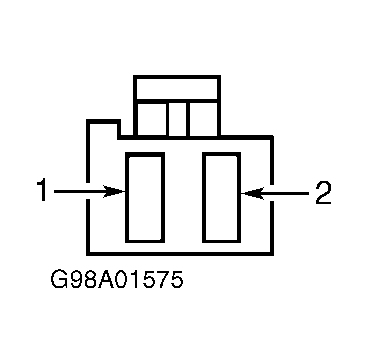
- Ensure ignition switch is in LOCK position. Ensure battery junction box maxi-fuse No. 8 is still removed. Remove central junction box fuse No. 30 (7.5-amp). Disconnect Driver's Seat Module (DSM) 2-pin harness connector C337. See Fig 4
. DSM is located under driver's seat. Measure resistance in Red wire between output side of battery junction box maxi-fuse No. 8 and input side of central junction box fuse No. 30. If resistance is less than 5 ohms, go to next step. If resistance is 5 ohms or more, repair open in Red wire between battery junction box and central junction box. Retest system for normal operation.
 Courtesy of FORD MOTOR CO.
- Measure resistance between ground and output side of battery junction box maxi-fuse No. 8. If resistance is 10 k/ohms or more, go to next step. If resistance is less than 10 k/ohms, repair short to ground in Red wire between battery junction box and central junction box. Retest system for normal operation.
- Ensure ignition switch is in LOCK position. Install battery junction box maxi-fuse No. 8. Install central junction box fuse No. 30. Connect DSM 2-pin harness connector C337. Operate driver's power seat in all directions. If driver's power seat operates properly in all directions, go to next step. If driver's power seat does not operate properly in all directions, replace DSM. Retest system for normal operation.
- Inspect DSM for water damage. If water damage does not exist, go to next step. If water damage exists, replace DSM. Retest system for normal operation.
- Turn ignition switch to RUN position. Operate driver's power window, exterior power mirror and door lock switches in all directions. If battery junction box maxi-fuse No. 8 blows, replace DDM. If maxi-fuse No. 8 does not blow, verify symptom and repair as necessary. See SYMPTOM INDEX
table.