Service Adjustment Procedures: Bleeding
- Jack up the front wheels and support them by using a rigid rack.
- Manually turn the oil pump pulley a few times.
- Turn the steering wheel all the way to the left and to the right five or six times.
- On vehicles with a patrol engine, disconnect the high tension cable. On vehicles with a diesel engine, remove the fuel cut valve connector attached to the injection pump.
- While operating the starter motor intermittently, turn the steering wheel all the way to the left and right five or six times (for 15 to 20 seconds).
CAUTION:
- During air bleeding, replenish the fluid supply so that the level never falls below the lower position of the filter.
- If air bleeding is done while engine is running, the air will be broken up and absorbed into the fluid; be sure to do the bleeding only while cranking.
- On vehicles with a patrol engine, connect the ignition cable. On vehicles with a diesel engine, connect the fuel cut valve connector attached to the injection pump. Start the engine (idling).
- Turn the steering wheel to the left and right until there are no air bubbles in the oil reservoir.
- Confirm that the fluid is not milky, and that the level is up to the specified position on the level gauge.
- Confirm that there is very little change in the fluid level when the steering wheel is turned left and right.
- Check whether or not the change in the fluid level is within 5 mm (0.20 in.) when the engine is stopped and when it is running.
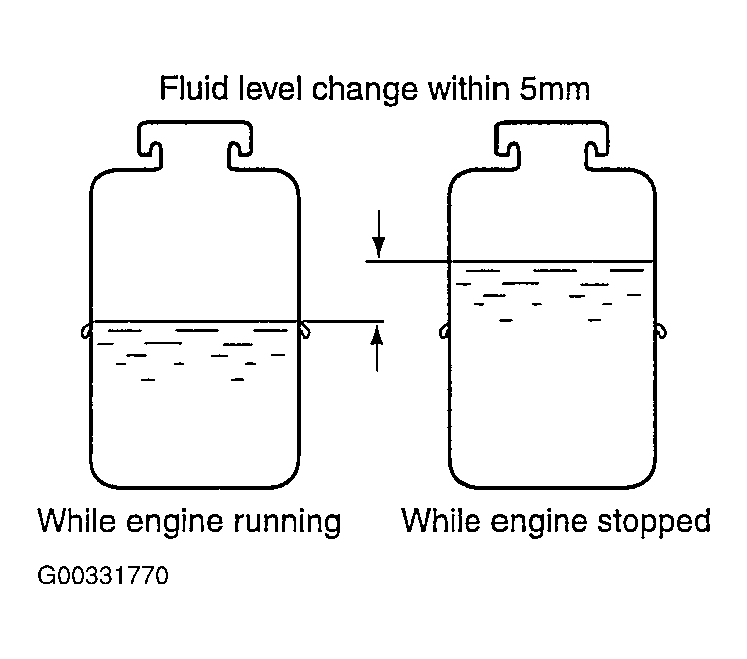 Courtesy of KIA MOTORS AMERICA, INC.
CAUTION:
- If the change of the fluid level is 5 mm (0.20 in.) or more, the air has not been completely bled from the system, and thus must be bled completely.
- If the fluid level rises suddenly after the engine is stopped, the air has not been completely bled.
- If air bleeding is not complete, there will be abnormal noises from the pump and the flow-control valve, and this condition could cause a lessening of the life of the pump, etc.