DTC P0450: EVAP System Pressure Sensor Malfunction Or DTC P0451: EVAP System Pressure Sensor Range/Performance: Procedure
- Turn ignition off. Disconnect ECM connector B02 and FTPS 3-pin connector. See Figure
. Measure resistance of Brown wire between connector terminal No. 1 of FTPS and ECM connector terminal No. 9. See Figure
. If resistance is less than one ohm, go to next step. If resistance is one ohm or more, check connectors for loose, damaged or corroded terminals. If problem exists, repair as necessary appropriate connector.
- Reconnect ECM connector. FTPS still disconnected turn ignition on. Measure voltage at FTPS harness connector terminal No. 2 (Blue wire). Voltage should be about 5 volts. If voltage is as specified, go to next step. If voltage is lower than specified, check connectors for loose, damaged or corroded terminals. If problem exists, repair appropriate connector. If voltage is higher than specified, locate and repair short to power in Blue wire between ECM and fuel tank unit. If voltage at ECM connector is within specifications and voltage at fuel tank unit is less than specifications, locate and repair open circuit in blue wire between ECM and fuel tank unit.
- Turn ignition off. Remove FTPS from fuel tank unit. Connect FTPS and ECM connectors. Turn ignition on. Backprobe and measure voltage between ECM connector B02 terminal No. 15 (White wire) and ground. See Figure
. Voltage should be 2-3 volts. If voltage is as specified, go to next step. If voltage is not as specified, temporarily install a known good FTPS. If problem is corrected, replace FTPS.
- Turn ignition off. Disconnect hose between EVAP canister and CCV at EVAP canister end. See next step for alterative method of testing CCV, or blow through hose and check if air escapes from port on back of CCV. Air should escape. Turn ignition on. Backprobe and connect jumper wire between ECM connector B02 terminal No. 20 (RED wire) and ground. See Figure
. Blow through hose and check if air escapes from port on back of CCV. Air should not escape. Repeat test 4-5 times to ensure reliability of results. If CCV reliably operates as specified, check connectors between ECM and FTPS for loose, damaged or corroded terminals. If problem exists, repair appropriate connector. If CCV does not operate as specified, or operation is not reliable, check hose between EVAP canister and CCV for restriction. If problem exists, repair hose as necessary. If problem is not found with hose, replace CCV.
- Remove CCV. CCV should be open. Blow air into port "A". Air should escape from port "B". See Fig 1
. Close CCV by jumpering CCV terminal No. 2 to battery positive terminal. Jumper other CCV terminal to battery negative terminal. See Figure
. Blow air into port "A". Air should not escape from port "B". Repeat procedure 4-5 times to ensure reliability of results. If CCV is operating reliably as specified, go to next step. If CCV is not operating as specified, or operation is not reliable, replace CCV, then go to next step.
- Check connectors between ECM and FTPS for loose, damaged or corroded terminals. If problem exists, repair appropriate connector. Check hose between EVAP canister and CCV for restriction. If problem exists, repair hose as necessary.
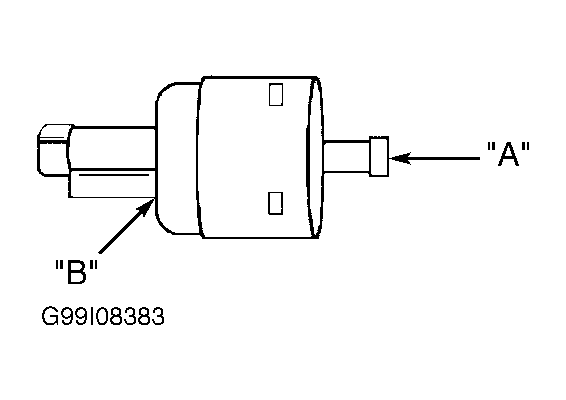 Courtesy of KIA MOTORS AMERICA, INC.