EGR Valve Installed
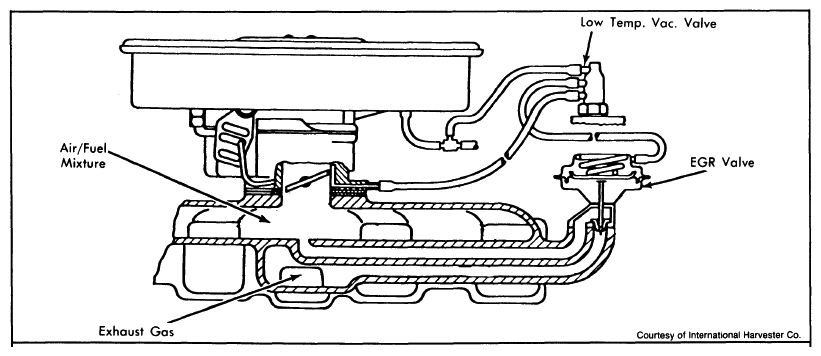
- Connect tachometer and warm engine to normal operating temperature. Set engine speed to fast idle (or high enough to obtain at least 5 in. Hg at EGR valve). Place gloved finger beneath EGR valve so diaphragm movement can be left.
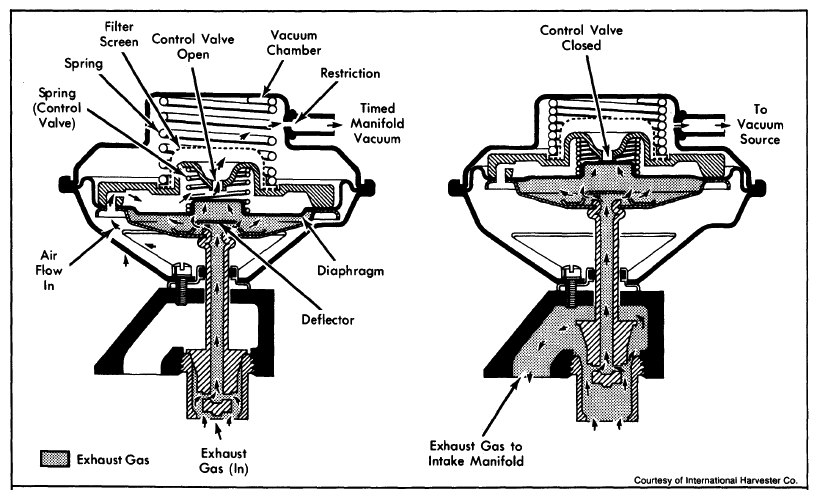
- Disconnect vacuum hose from EGR valve and watch for diaphragm movement. Diaphragm should move downward (valve closed) and an increase in engine RPM should be noticed.
 Courtesy of NOT AVAILABLE
 Courtesy of NOT AVAILABLE
 Courtesy of NOT AVAILABLE
- Reconnect vacuum hose. Diaphragm should move upward (valve open) and engine RPM should decrease by at least 150 RPM.
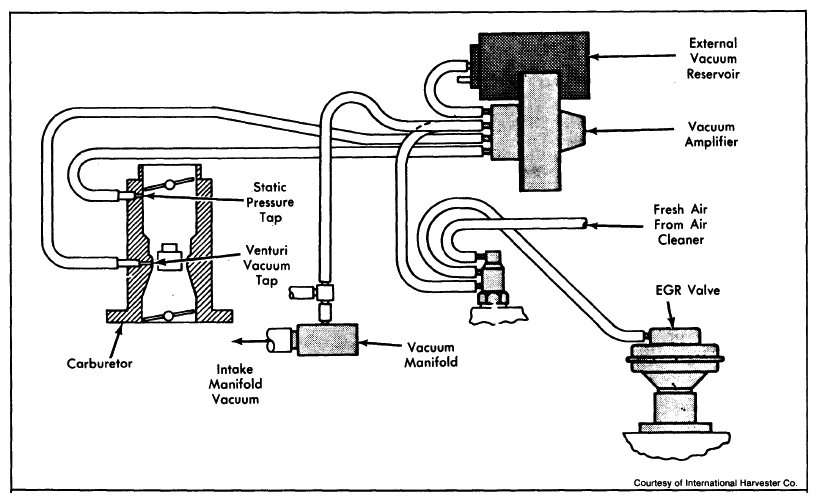
- If no diaphragm movement is noticed during test, check for vacuum at hose. If vacuum is present, replace EGR valve. If no vacuum is present, check for plugged or leaking hose or carburetor port.
- If diaphragm moves with no change in engine RPM, check manifold EGR passages (V8 engines only) for blockage.