PGM-FI Main Relay Circuit Check: S2000
- Turn ignition off. Remove PGM-FI main relay. PGM-FI main relay is located at right side of steering column. See COMPONENT LOCATIONS . Check for continuity between ground and PGM-FI main relay harness connector terminal No. 3 (Black wire). See Fig 1. If continuity exists, go to next step. If continuity does not exist, repair open in Black wire between PGM-FI main relay connector terminal No. 3 and ground connection. Ground connection is located at rear of engine, behind cylinder head. See WIRING DIAGRAMS
article.
- Measure voltage between ground and PGM-FI main relay harness connector terminal No. 7 (White/Green wire). See WIRING DIAGRAMS
article. If battery voltage exists, go to next step. If battery voltage does not exist, check for a blown No. 46 ACG S (15-amp) fuse in under-dash fuse/relay box. If fuse is blown check for a short in White/Green wire between PGM-FI main relay and No. 46 ACG S (15-amp) fuse. If fuse is okay, check for open in White/Green wire between PGM-FI main relay and No. 46 ACG S (15-amp) fuse. See WIRING DIAGRAMS
article.
- Turn ignition on. Measure voltage between ground and PGM-FI main relay harness connector terminal No. 5 (Black/Yellow wire). If battery voltage exists, go to next step. If battery voltage does not exist, check for a blown No. 2 FUEL PUMP SRS (15-amp) fuse in under-dash fuse/relay box. If fuse is blown, check for short in Black/Yellow wire between No. 2 FUEL PUMP SRS (15-amp) fuse and PGM-FI main relay. If fuse is okay, check for open in Black/Yellow wire between No. 2 FUEL PUMP SRS (15-amp) fuse and PGM-FI main relay. See WIRING DIAGRAMS
article.
- Depress clutch pedal. Turn ignition switch to ON position. Push start button. Measure voltage between ground and PGM-FI main relay harness connector terminal No. 2 (Blue/Orange wire). If battery voltage exists, go to next step. If battery voltage does not exist, check for a blown No. 21 STARTER SIGNAL (7.5-amp) fuse in under-dash fuse/relay box. If fuse is blown, check for short in Blue/Orange wire between No. 21 STARTER SIGNAL (7.5-amp) fuse and PGM-FI main relay. If fuse is okay, check for open in Blue/Orange wire between No. 21 STARTER SIGNAL (7.5-amp) fuse and PGM-FI main relay. See WIRING DIAGRAMS
article.
- Turn ignition off. Disconnect PCM 32-pin connector "A". Check for continuity in Green/Yellow wire between PGM-FI main relay harness connector terminal No. 1 and PCM 32-pin harness connector "A" terminal No. 15. See PIN VOLTAGE CHARTS
article article. If continuity exists, go to next step. If continuity does not exist, repair open in Green/Yellow wire between PGM-FI main relay and PCM 32-pin connector "A". See WIRING DIAGRAMS
article.
- Reconnect PCM and PGM-FI main relay connectors. Turn ignition on. Using backprobe set, measure voltage between PCM 25-pin connector "B" terminals No. 1 (Yellow/Black wire) and No. 20 (Brown/Yellow wire), and between No. 9 (Yellow/Black wire) and No. 20 (Brown/Yellow wire). If battery voltage exists, go to next step. If battery voltage does not exist, repair open in Yellow/Black wire between PCM 25-pin connector "B" terminals No. 1 or No. 9 and PGM-FI main relay. See WIRING DIAGRAMS
article. If wires are okay, replace PGM-FI main relay.
- Turn ignition off. Using backprobe set, measure voltage between PCM 32-pin connector "A" terminal No. 15 (Green/Yellow wire) and PCM 25-pin connector "B" terminal No. 2 (Black wire). See PIN VOLTAGE CHARTS
article. Turn ignition on. If one volt or less exists for 2 seconds after ignition is first turned on, check PGM-FI main relay. See PGM-FI MAIN RELAY TEST . If more than one volt exists, substitute a known-good PCM and recheck. See SUBSTITUTING PCM in SELF-DIAGNOSTICS - INTRODUCTION
article. If symptom or indication goes away, replace original PCM.
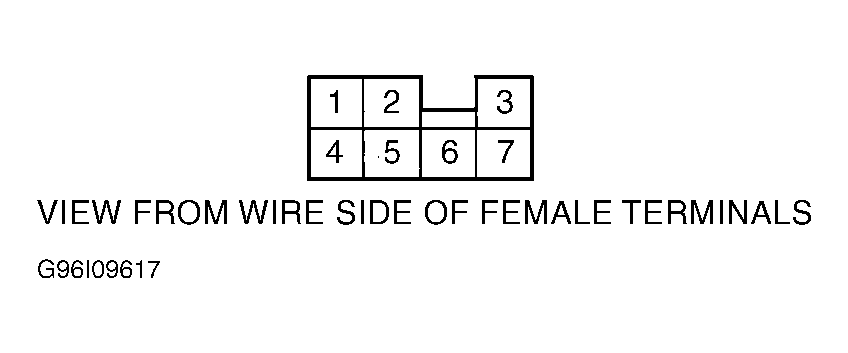 Courtesy of AMERICAN HONDA MOTOR CO., INC.