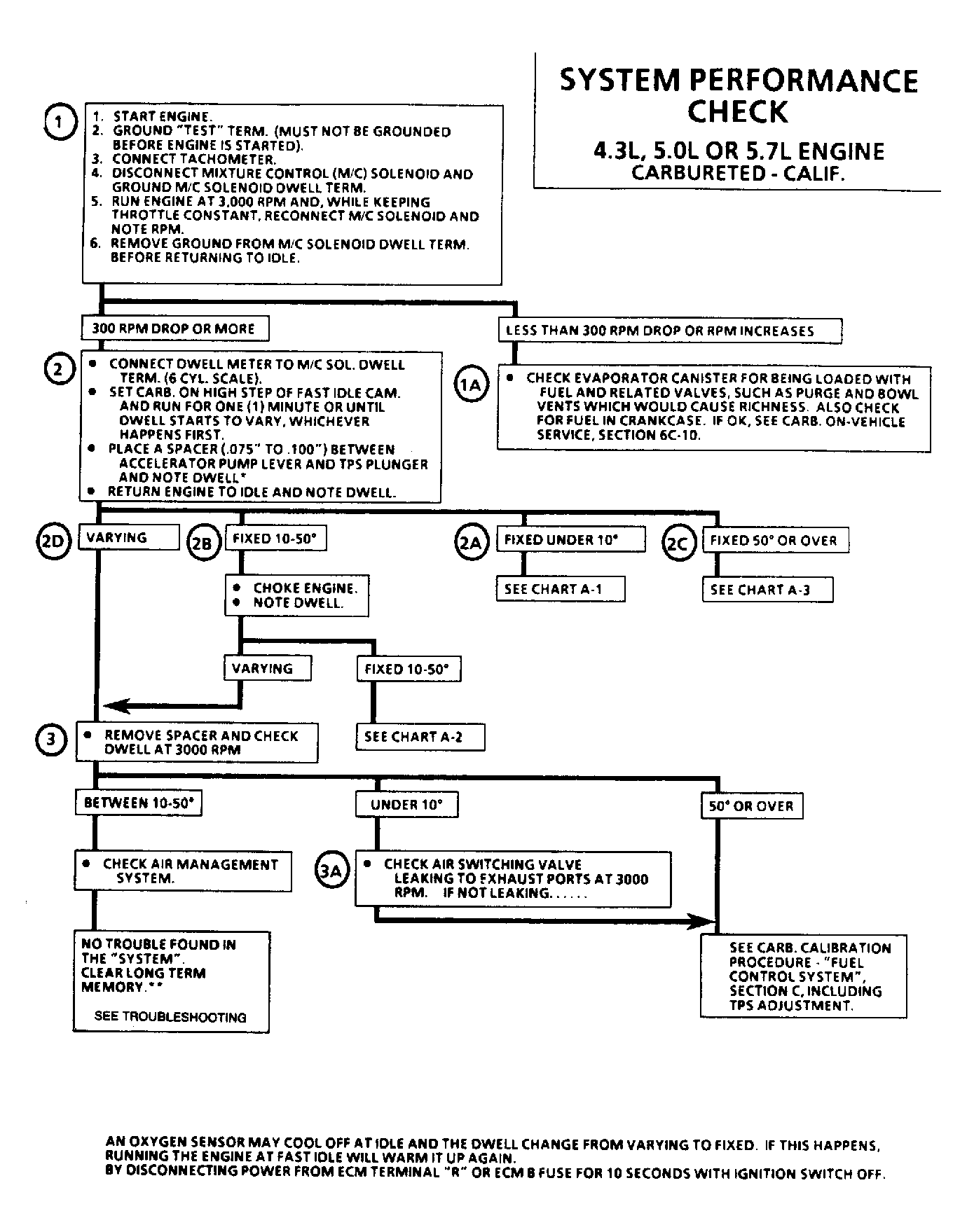
System Performance Check
- This test checks carburetor ability to change air/fuel mixture. Disconnecting M/C solenoid makes carburetor run full rich, and reconnecting it with dwell lead grounded makes carburetor run full lean. RPM normally drops 400-1000 RPM (300 RPM minimum) as solenoid is reconnected.
- 1A) If plugging the PCV, purge, or bowl vent hose causes RPM to drop more than 300 RPM, that hose leads to the source of the problem. If RPM increases as M/C solenoid is connected, it indicates system is running extremely rich. This can sometimes be caused by incorrect valve timing.
- This test checks for proper control of idle circuit.
- 2A) This indicates a full rich command to the carburetor, caused by: lean engine condition, grounded oxygen sensor wire or bad sensor, open wire from ECM terminal "14" to ground, open wire to ECM terminal "22.", or open coolant sensor switch.
- 2B) This indicates an open loop condition that can be caused by: an open oxygen sensor circuit or bad sensor, an open coolant sensor circuit, or an open wire from ECM terminal "14" to ground.
- 2C) This indicates a full lean command from a rich engine condition caused by: M/C solenoid wires reversed, leaking bowl vent valve, excessive fuel in vapor canister, fuel in crankcase, faulty carburetor calibration or carburetor.
- 2D) Indicates closed loop operation, normal dwell reading is between 10°-50° but varying.
- Checks for proper control of main metering system. RPM must be at least 3000 to get into the main metering system operation.
- 3A) A missing "O" ring between the switching valve solenoid and the valve, or a defective valve, may cause air to leak to the exhaust ports at higher RPM only.