Starter Does Not Crank
- Check Voltage At Starter
Disconnect wire from starter solenoid "S" terminal (Tan/Red or White/Pink wire). Hold ignition switch to START position. Measure voltage between ground and starter solenoid "S" terminal. If battery voltage does not exist, go to next step. If battery voltage exists, check battery cable and ground connections. See VOLTAGE DROP TEST
and STARTER GROUND CIRCUIT TEST. Repair or replace battery cables as necessary. If battery cables are okay, replace starter and solenoid assembly.
- Check Voltage To Ignition Switch
Disconnect ignition switch harness connector (located in upper steering column). Measure voltage between ground and Yellow wires (3) at ignition switch harness connector. If battery voltage exists at all 3 Yellow wires, go to next step. If battery voltage does not exist at all 3 Yellow wires, repair open wire in question. Restore electrical connections and check system operation.
- Check Ignition Switch Operation
Reconnect ignition switch. While holding ignition switch in START position, measure voltage between ground and Red/Light Green wire at ignition switch harness connector. If battery voltage exists, go to next step. If battery voltage does not exist, replace ignition switch. Restore electrical connections and check system operation.
- Check Voltage To Transmission Range Sensor
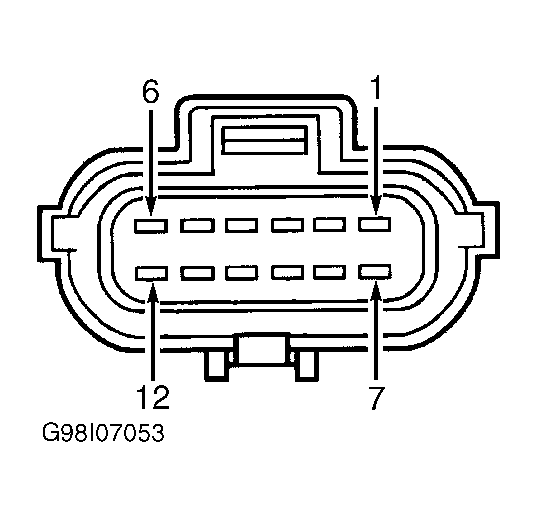
Disconnect Transmission Range (TR) sensor harness connector. While holding ignition switch in START position, measure voltage between TR sensor terminal No. 10 and ground. See Fig 1
. If battery voltage exists, go to next step. If battery voltage does not exist, repair open Brown/Pink or Red/Light Blue wire between fuse panel and TR sensor. Restore electrical connections and check system operation.
 Courtesy of FORD MOTOR CO.
- Check Transmission Range Sensor Operation
Reconnect TR sensor. Place transmission selector in Park or Neutral. White holding ignition switch in START position, backprobe TR sensor terminal No. 12. See Fig 1
. If battery voltage exists, go to next step. If battery voltage does not exist, replace TR sensor. Restore electrical connections and check system operation.
- Check Voltage To Starter Relay
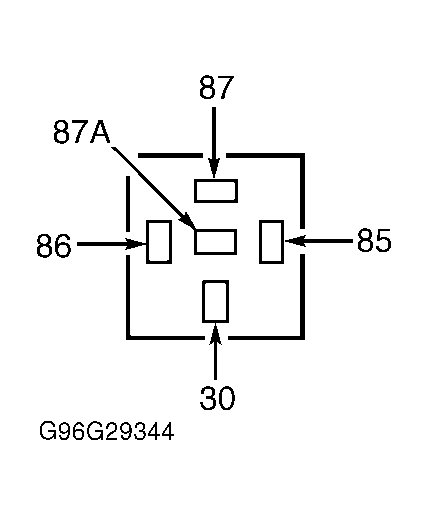
Remove starter relay from engine compartment fuse/relay box. Place transmission in Park and hold ignition switch in START position. Measure voltage between starter relay connector terminal No. 86 (Tan/Red or White/Pink wire) and ground. See Fig 2
. If battery voltage exists, go to next step. If battery voltage does not exist, repair open Tan/Red or White/Pink wire. Restore electrical connections and check system operation.
 Courtesy of FORD MOTOR CO.
- Check Voltage To Starter Relay
Measure voltage between ground and starter relay harness connector terminal No. 30 (Light Green/Purple wire). See Fig 2
. If battery voltage exists, go to next step. If battery voltage does not exist, check IGNITION Maxi-fuse (40-amp). If fuse is okay, repair open Light Green/Purple wire. Restore electrical connections and check system operation.
- Check Voltage To Starter Motor
Disconnect Tan/Red or White/Pink wire from starter solenoid "S" terminal. With transmission in Park and ignition switch in START position, measure voltage between ground and Tan/Red or White/Pink wire. If battery voltage exists, replace starter relay. If battery voltage does not exists, repair open Tan/Red or White/Pink wire. Restore electrical connections and check system operation.