Measuring Procedure
- Place vehicle on alignment rack. To ensure riding height is measured at a consistent point, height should only be measured after SERVICE BAY DIAGNOSTICS routine has been completed and Super Star II tester displays a Code 12. See DIAGNOSIS & TESTING in appropriate ELECTRONIC SUSPENSION article in the SUSPENSION section for diagnostic routine.
- Air suspension diagnostics will not work using a Super Star tester. After SERVICE BAY DIAGNOSTICS routine is completed and Code 12 is displayed, remove Super Star II tester. Turn suspension power switch to OFF position. Power switch is located in left side of trunk. Leave ignition switch in RUN position.
- Vehicle should now be at top of trim band. Measure front riding height "C" dimension. See Fig 1. Dimension "C" is vertical difference between lower arm inner pivot and bottom center of ball joint retainer disc.
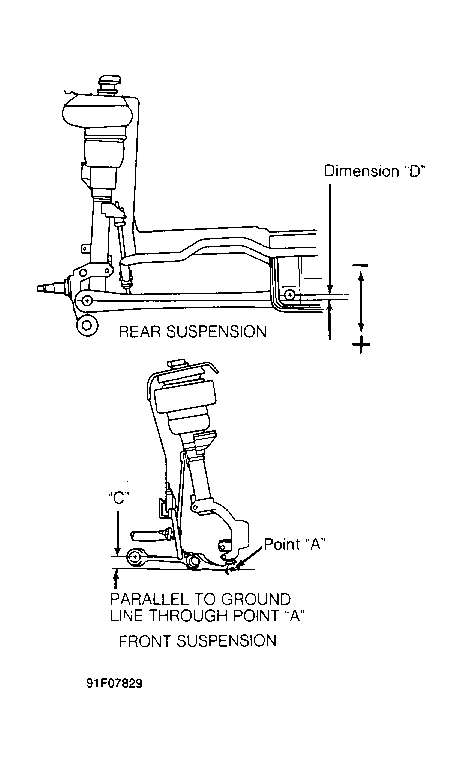 Courtesy of FORD MOTOR CO.
- Measure rear suspension "D" dimension. Rear riding height is difference between rear lower arm pivot attachment height and outer pivot Height.
- Suspension heights for top of trim band are:
- "C": 1.72" (44 mm) ±.39" (10.0 mm).
- "D": -.36" (-9.3 mm). Tolerance is +.39" (10 mm) and -.20" (5 mm).
- For reference purposes, riding heights at center of trim band are about .35" (9.0 mm) lower for front and .47" (12.0 mm) lower for rear than heights listed in step 5).