Charge Indicator Light
- The Integral Alternator Regulator (IAR) has a circuit that will indicate a high or low battery voltage condition. The charge indicator light will come on if alternator is not charging, or is overcharging. If either of these conditions exists, see appropriate ALTERNATOR article in ELECTRICAL section.
- If charge indicator light does not come on with ignition switch in RUN position (engine off), check ignition switch-to-regulator terminal "I" circuit. Verify circuit is not open or indicator bulb is not blown. Replace bulb if necessary and recheck.
- If indicator light still does not come on, disconnect wiring connector from regulator. Connect a jumper wire from "I" terminal to battery negative post. See Fig 1. Turn ignition switch to RUN position (engine off). If indicator light does not come on, check bulb for continuity and replace if necessary. If bulb is good, perform voltage regulator "I" circuit tests. See appropriate ALTERNATOR article in ELECTRICAL section.
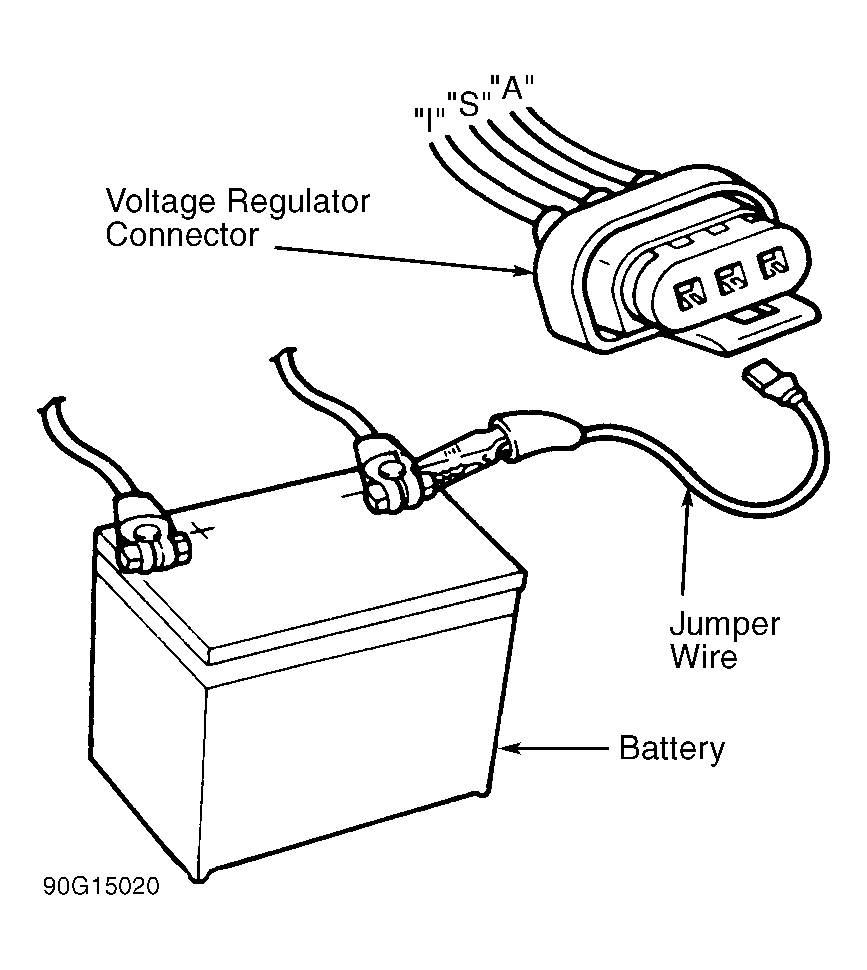 Courtesy of FORD MOTOR CO.
- On Bronco, "E" and "F" Series, check 500-ohm resistor across indicator light. On all others, if indicator light comes on, remove jumper wire and reconnect regulator connector. Connect VOM negative lead to negative battery post. Connect positive lead to voltage regulator terminal "A" screw at alternator. Battery voltage should be indicated.
- If battery voltage is not indicated, repair circuit "A" wiring. If battery voltage is present, clean and tighten ground connections of alternator and regulator. Turn ignition to RUN (engine off). If indicator light still does not come on, replace regulator. See appropriate chassis wiring diagram in WIRING DIAGRAMS section.