Test Group YBMXV02.8LEV
- Catalyst Monitoring General Description -
Catalyst monitoring is based on monitoring its oxygen storage capability. The engine closed loop feedback control generates lambda (air/fuel ratio) oscillations in the exhaust gas. These oscillations are dampened by the oxygen storage activity of the catalyst. The amplitude of the remaining lambda oscillations downstream of the catalyst indicates the storage capability.
- Monitoring Procedure -
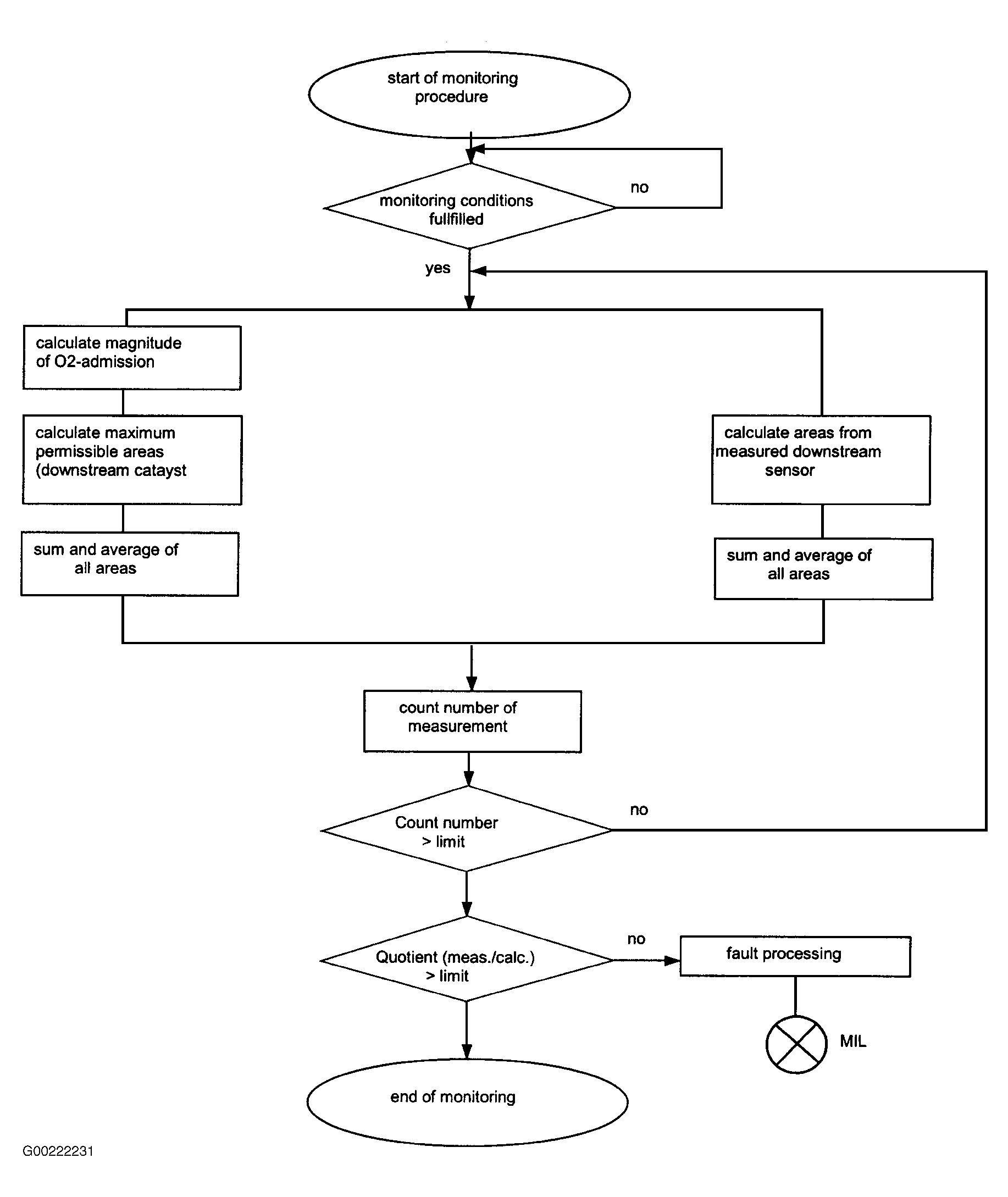
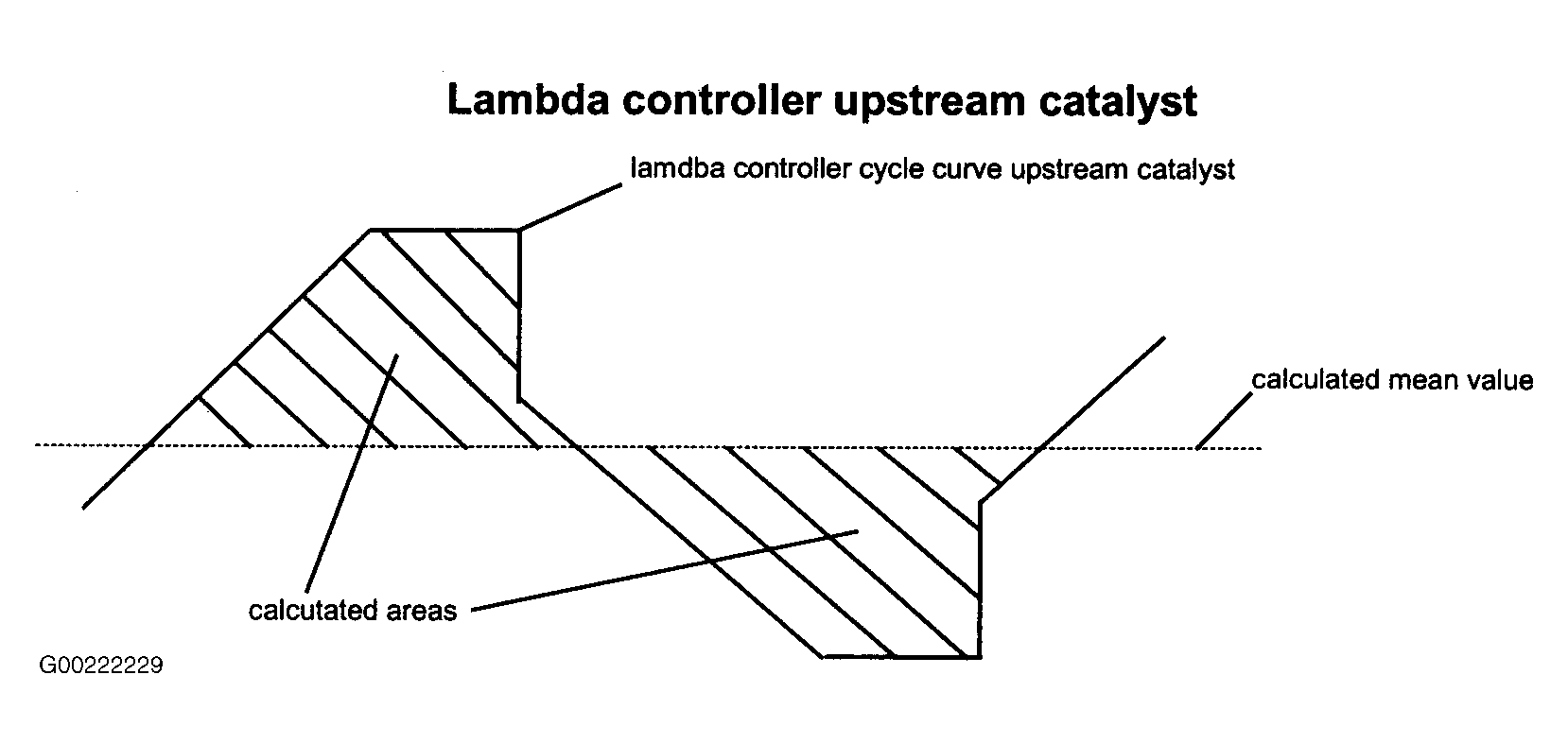
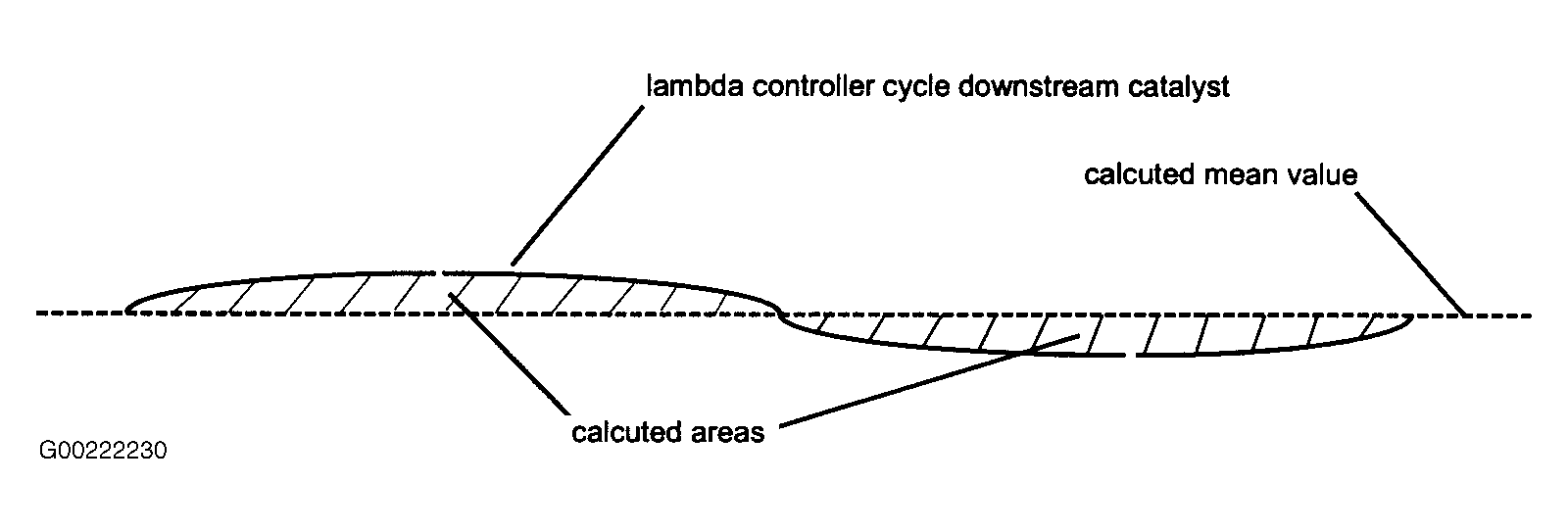
In order to determine the catalysts efficiency a fixed number of complete lambda controller cycles (oxygen oscillations from upstream sensor) are used to calculate the areas which are enclosed by the controller cycle curve and is also calculated mean value. See Fig 1. The average of all areas displays the magnitude of oxygen admission to the catalytic converter. The magnitude of oxygen admission is used to calculate the maximum permissible oscillation (areas of the cycle) of the downstream sensor of a still good working catalyst. See Fig 2. Now the original measured oscillation (average of areas) from downstream sensor is compared to the calculated maximum permissible value. See Fig 3. A fault is detected if the quotient (measured to calculated value) is greater than a fixed number.
 Courtesy of BMW OF NORTH AMERICA, INC.
 Courtesy of BMW OF NORTH AMERICA, INC.
 Courtesy of BMW OF NORTH AMERICA, INC.