- Using a putty knife, scrape the old adhesive smooth to a thickness of about 2 mm (0.08 in) on the bonding surface around the entire windshield opening flange.
NOTE:
- Do not scrape down to the painted surface of the body; damaged paint will interfere with proper bonding.
- Remove the rubber dams and fasteners from the body.
- Mask off surrounding surfaces before painting.
- Clean the body bonding surface with a sponge dampened in alcohol.
NOTE:
After cleaning, keep oil, grease and water from getting on the surface.
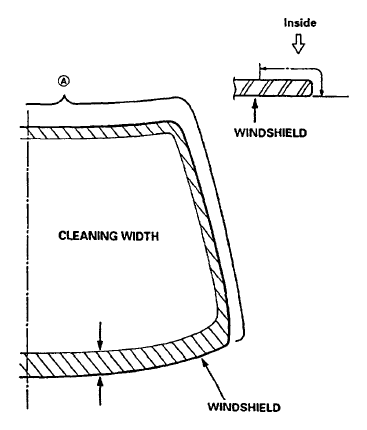
- If the old windshield is to be reinstalled, use a putty knife to scrape off all traces of old adhesive and the rubber dam, then clean the windshield surface with alcohol where new adhesive is to be applied.
NOTE:
Make sure the bonding surface is kept free of water, oil and grease.
CAUTION:
Avoid setting the windshield on its edges; small chips may later develop into cracks.
NOTE:
- Clean the shadowed area.
- Clean area @ as shown.
 Courtesy of AMERICAN HONDA MOTOR CO., INC.
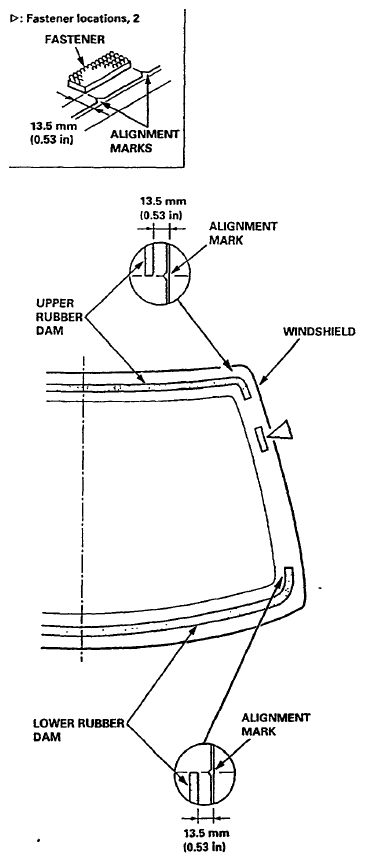
- Glue the rubber dam and fasteners to the inside face of the windshield as shown.
NOTE:
Be careful not to touch the windshield where adhesive will be applied.
 Courtesy of AMERICAN HONDA MOTOR CO., INC.
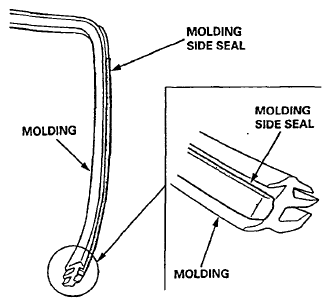
- Glue the molding side seal to the windshield molding on each side.
 Courtesy of AMERICAN HONDA MOTOR CO., INC.
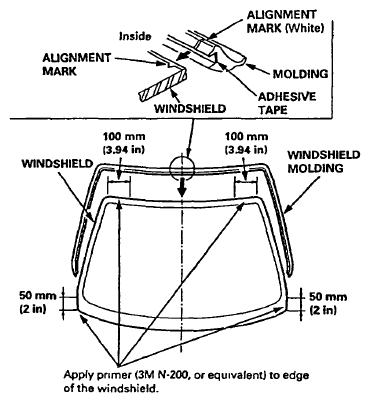
- Align and glue the molding to the edge of the windshield.
NOTE:
Be careful not to touch the windshield where adhesive will be applied.
 Courtesy of AMERICAN HONDA MOTOR CO., INC.
- Install the glass brackets and fasteners as shown.
NOTE:
The numbers after the part names show the quantities of the parts used.
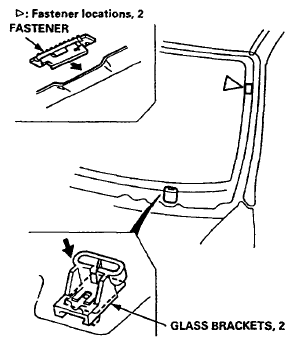 Courtesy of AMERICAN HONDA MOTOR CO., INC.
- Set the windshield on the glass brackets, then center it in the opening. Make alignment marks across the windshield and body with a grease pencil at the four points shown.
NOTE:
Be careful not to touch the windshield where adhesive will be applied.
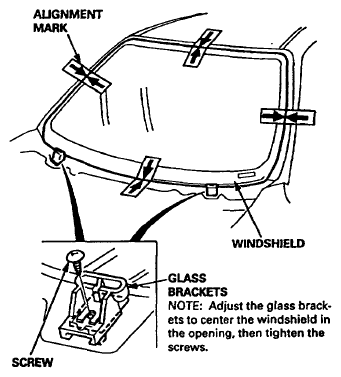 Courtesy of AMERICAN HONDA MOTOR CO., INC.
- Remove the windshield.
- With a sponge, apply a light coat of glass primer around the edge of the windshield as shown, then lightly wipe it off with gauze or cheesecloth.
NOTE:
- Do not apply body primer to the windshield, and do not get body and glass primer sponges mixed up.
- Never touch the primed surfaces with your hands. If you do, the adhesive may not bond to the windshield properly, causing a leak after the. windshield is installed.
- Keep water, dust, and abrasive materials away from the primed surface.
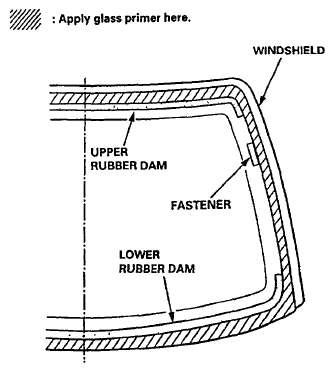 Courtesy of AMERICAN HONDA MOTOR CO., INC.
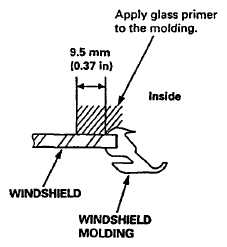 Courtesy of AMERICAN HONDA MOTOR CO., INC.
- With a sponge, apply a light coat of body primer to the original adhesive remaining around the windshield opening flange. Let the body primer dry for at least 10 minutes.
NOTE:
- Do not apply glass primer to the body, and be careful not to mix up glass and body primer sponges.
- Never touch the primed surfaces with your hands.
- Mask off the dashboard before painting the flange.
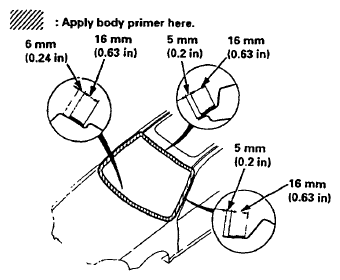 Courtesy of AMERICAN HONDA MOTOR CO., INC.
- Thoroughly mix the adhesive and hardener together on a glass or metal plate with a putty knife.
NOTE:
- Clean the plate with a sponge and alcohol before mixing.
- Follow the instructions that come with the adhesive.
- Before filling a cartridge, cut the end of the nozzle as shown.
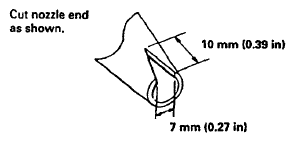 Courtesy of AMERICAN HONDA MOTOR CO., INC.
- Pack adhesive into the cartridge without air pockets to ensure continuous delivery. Put the cartridge in a caulking gun, and run a bead of adhesive around the edge of the windshield as shown.
NOTE:
Apply the adhesive within 30 minutes after applying the glass primer.
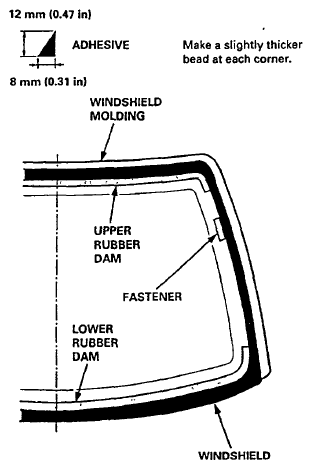 Courtesy of AMERICAN HONDA MOTOR CO., INC.
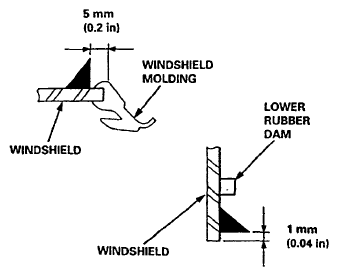 Courtesy of AMERICAN HONDA MOTOR CO., INC.
- Use suction cups to hold the windshield over the opening, align it with the alignment marks made in step 8, and set it down on the adhesive. Lightly push on the windshield until its edge is fully seated on the adhesive all the way around.
NOTE:
Do not open or close the doors until adhesive is dry.
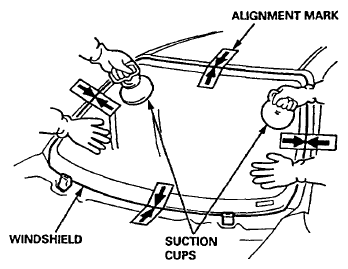 Courtesy of AMERICAN HONDA MOTOR CO., INC.
- Scrape or wipe the excess adhesive off with a putty knife or towel.
NOTE:
To remove adhesive from a painted surface or the windshield, wipe with a soft shop towel dampened with alcohol.
- Let the adhesive dry for at least one hour, then spray water over the windshield and check for leaks. Mark the leaking areas, let the windshield dry, then seal with sealant.
NOTE:
- Let the adhesive dry stand for at least four hours after windshield installation. If the vehicle has to be used within the first four hours, it must be driven slowly.
- Keep the windshield dry for the first hour after installation.
- Check that the ends of the side molding are set under the air scoop.
- Reinstall all remaining removed parts.
NOTE:
- Install the rearview mirror rubber damper after the adhesive has dried thoroughly.
- Advise the customer not to do the following things for two to three days:
- Slam the doors with all the windows rolled up.
- Twist the body excessively (such as when going in and out of driveways at an angle or driving over rough, uneven roads).