Abs Indicator Light Does Not Come On
- Check BACK-UP LIGHTS fuse (10-amp) in underdash fuse/relay block. See Figure
or Figure
. Replace fuse if blown, and retest system. If fuse is okay, disconnect ABS control unit 12-pin connector. If ABS indicator light does not come on, go to next step. If ABS indicator light comes on, check for poor contact at ABS control unit. If connection is okay, replace ABS control unit.
- Disconnect gauge assembly 22-pin connector. Turn ignition on. Using DVOM connected to ground, measure voltage at 22-pin gauge assembly connector terminal No. 6 (Yellow wire). See Fig 1
. If battery voltage exists, go to next step. If battery voltage does not exist, turn ignition off. Check wiring between gauge assembly and BACK-UP LIGHTS fuse (10-amp) for an open. See WIRING DIAGRAMS
. If wiring is okay, replace fuse block.
- Turn ignition off. Remove gauge assembly. Check ABS indicator bulb in gauge assembly. Replace bulb if faulty, and retest system. If bulb is okay, go to next step.
- Turn ignition off. Disconnect gauge assembly 16-pin connector. Check for continuity to ground at gauge assembly 16-pin connector terminal No. 9 (Blue/White wire). See Figure
. If continuity does not exist, go to next step. If continuity exists, repair short to ground in Blue/White wire between gauge assembly and ABS control unit. See WIRING DIAGRAMS
.
- Reconnect gauge assembly 16-pin and 22-pin connectors. Connect jumper wire from ground to 22-pin gauge assembly connector terminal No. 10 (Black wire). See Fig 1
. Turn ignition on. If ABS indicator light comes on, go to next step. If ABS indicator light does not come on, replace printed circuit in gauge assembly.
- Turn ignition off. Repair open in Black wire between ground and gauge assembly 22-pin connector terminal No. 10. See WIRING DIAGRAMS
.
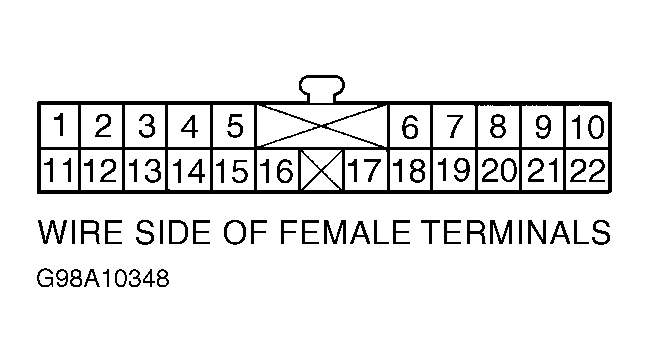 Courtesy of AMERICAN HONDA MOTOR CO., INC.